

How to Create a Culture That Attracts Top Talent
Summary
Tune into this episode of the Roofr Report podcast with guest, Corey Combes.
After spending over a decade in roofing, Corey started his own business and is now the CEO of SouthShore Roofing: a roofing business known for it's outstanding culture and training.
In this episode, Corey talks about what he did to create a culture that both attracts and retains top talent, and gives you actionable tips to improve your own culture.
Transcript
Pete (00:02.229)
All right, everybody. Welcome back to the Roof for Podcast. I am your host, Pete McKendrick. And, uh, you know, a little while back, we made a transition in the style of our podcast a little bit where we started to move away from talking about tech and talking about all the things around, you know, all the tools needed to run your business, and we really started to focus on the core of running the business, right? And the things that you need to really focus on to make yourself successful and make your business successful.
And to build a team and, uh, you know, that leads right into our topic today. And our, our guests, uh, Corey Combs. So, uh, really excited to have you on Corey. Um, Corey is the owner of South shore. I'll let him do a quick introduction of himself here, and then we'll kind of dive into Corey's story a little bit and talk a little bit about, uh, you know, really what we want to focus on here today is building that team culture, right? Like that's, that's really our topic for today. And I think it's one that's become very, very important.
uh, you know, in, in the industry, but also just in general, uh, with anyone running a business, so, um, Corey excited to have you glad you could come on.
corey_ (01:10.654)
Yeah, thanks. And I was just thinking about this morning, actually you and I met years ago, right? And so it's been interesting how things have changed and I'm happy that you're with Rufr.
pete (01:20.089)
It's funny.
corey_ (01:32.002)
sort of kept this relationship throughout the years. It's been really cool.
pete (01:35.977)
It's funny. You know, it's funny to me. I wasn't sure if you remembered, but yeah, I was actually, I was actually the sales rep that sold, uh, Corey on, on, uh, was that your first CRM? Yeah. Yeah. So yeah, that's funny. And that was, geez. I mean, now probably what five, five years ago, probably. Yeah. Yeah. So very cool.
corey_ (01:40.119)
Oh yeah, yeah.
corey_ (01:48.754)
Yeah, yeah, I'm, yeah, for CRM, man. Yeah.
corey_ (01:57.478)
Yeah, four or five years ago, yeah.
pete (02:01.461)
It's funny that you remember that. Yeah. It's funny. I was actually thinking the same thing this morning. I was like, man, Corey and I've known each other for a while.
corey_ (02:01.695)
Yeah.
corey_ (02:07.062)
Yeah. Yeah. And that dovetails a little bit into, you know, me and my company story. You know, I was just starting my own company. I was working for another large remodeling company. And I spent like three years planning the opening of my company. You know, in Florida, you have to have licensing and all of that stuff. So...
You know, I spent time studying, getting my licensing. I had, you know, I have my general contractor's license in Florida, and then I also have my, my roofing license in Florida. And during that time, I, um, really kind of focused on reading books, figuring out how I wanted my company to be structured and putting benchmarks in place to, you know, really give me a structure to help grow, um, because when you start out, you're, you know, you're by yourself basically, right? I mean, you know, it was just me.
It was me and an installation crew and that was close to five years ago and here we are now. So, yeah. Yep. Thanks for watching. See you next time.
pete (03:14.422)
Well, give us a little background on you. You know, where did you come, how did you get into roofing? You know, did you come from a contractor background? Did you grow up in it? You know, what's your story?
corey_ (03:24.446)
Yeah, my first job at the ripe old age of 12 was cleaning up construction sites for a friend of my mom's who owned a framing company here in Tampa. And I come from a blue collar family. My dad worked on the railroad for his entire career. And so part of that was being involved in construction. We always did.
all of the projects around the house. So he kind of taught me, you know, some of the stuff about construction. And so I was always in construction. And, you know, growing up, I was, I was not a great kid, man. I, you know, I got addicted to drugs and, you know, construction was sort of like the natural place that we went, you know? And my, you know, my first roofing job was in 1994. Worked on a tear off crew.
And the company was structured kind of, it had an interesting structure because, you know, in Florida, new construction was huge. I mean, that was, you know, it was exploding and, um, they had a tear off crew for re-roofs and then they had a dry end crew for new construction. So I worked on that crew. So we're either tearing off and drying in, or we were just drying in.
So I learned, you know, and I was the low guy. So, you know, I learned how to work a tear off shovel real well, you know, and we up and all that stuff. And then I moved into shangling and, you know, I worked in that company for close to eight years and learned how to shingle and it made good money. But then my family started to buy properties and do...
pete (04:54.317)
I'm going to go ahead and close the video.
corey_ (05:13.41)
do flips and buy rentals and all that stuff. And I was the construction guy, even though I didn't know anything but roofing. So they brought me on and I kind of did all the rental prep and painting and patching and all that stuff. And so, yeah, I mean, I just kind of learned hands-on and I made, really how I learned was making a lot of mistakes and doing things wrong.
pete (05:36.813)
Yeah.
pete (05:40.371)
Yeah.
corey_ (05:40.458)
And I had some good teachers, you know, throughout the years, but really how I learned was just messing stuff up, man. And then trying to figure out how to fix it. So yeah, I've been in construction for a while.
pete (05:49.289)
Yeah. Yeah. It's funny. You know, I started. Yeah. I mean, I did some contractor work for years and it was same thing. You know, like a lot of the, the best lessons I learned there were things that I made and said, Oh, this ain't going to work. You know, I just realized that I had epically failed and then figured out how to fix it from there. So, yeah. So I totally get that. So, so you finally decided to go into roofing, right? You start your own roofing company. Uh, tell us some of the challenges.
corey_ (06:12.301)
Yeah.
pete (06:18.997)
that you faced, you know, even maybe before you even really got the company launched and started doing stuff, you know, like you said, three years of planning, you know, there's a lot that goes into it. Right. And I think a lot of people drastically underestimate what it takes to start a business just to get a business off the ground and then ultimately to run it. So speak a little bit to like what you found is some of the biggest challenges with that.
corey_ (06:44.17)
Yeah. I mean, you know, one of the things that I feel really, really fortunate about is, you know, 2008, we had that epic crash. Construction was just non-existent. You know, flipping houses was non-existent. I was really left without a job, right? And, you know, we lost, we pretty much lost everything. I mean, you know, we were pretty invested in real estate.
I was just starting to sober up at the time as I was going through that whole transition and situation. And it was really difficult. I met a guy who, I actually met him in the rooms at AA, which was really fortuitous. And what he did was he sold marketing packages to health clubs. And so he traveled all over the country and taught health clubs how to market their business and how to sell.
And so that was my first introduction into learning how to sell and how to do marketing and all of that stuff. And I worked with him for several years. I opened a business with him and I learned a lot on the business operations, a lot of how to sell, like really the fundamentals of sales he taught me. And I was like, I was their number one sales guy, um, by a lot, like every year, year over year. And so, um, it gave me the confidence to, to open up a business with him.
We fumbled through that. We did pretty well. I mean, the business is still in existence. He and I kind of had our falling out. And so what happened was I got the confidence in understanding how to sell. And so when the market started to recover, I went to work for a big, a larger remodeling company, you know, at that time, this was, you know, 15, 16 years ago, you know, they were doing $12 million, which was huge at the time, right?
I learned how to sell remodeling and I learned how to structure my pitches and all of that stuff to be successful selling high-end. And we were the most expensive by far. We always walked in knowing we were going to be the most expensive. And so I learned a lot on how to sell. I got a lot of training. And what that company did was they really focused on being good at the fundamentals in terms of construction, understanding remodeling.
corey_ (09:02.99)
the core competencies of the company, which was how to do remodeling. Right. And so we went to training all the time on that stuff and I got a lot of good experience there. So I was still working for them when I decided to open my own company. And I was taking some of the stuff that they had taught me. I learned how the business side of it worked.
And I also learned some of the stuff that they did absolutely terribly. I mean, just right. They were, they were a good company. They were a successful company, but they did a lot of things really terribly. So I sort of took that and I mapped out everything that worked for me. And then I mapped out everything that didn't work to make sure that I didn't make those mistakes. I'm just going to tell you, I still made some of those mistakes, you know, running my own company. Um, but I, it was, it was an easier turnaround because I really had.
pete (09:35.412)
Yeah.
pete (09:52.525)
I'm going to go ahead and close the video.
corey_ (09:59.682)
the experience in the industry and I really have the experience in, you know, sales and marketing and, you know, remodeling and in all of that different stuff. So it really short my learning curve big time. So, you know, it was just the planning, man. I think the planning made all the difference in the world. I really do.
pete (10:21.537)
Yeah, it's interesting. You know, I did a podcast a while back with Dave Sullivan. I don't know if you know him. He, he has his own podcast that he does and he was a contractor for years. And he really focuses on the business plan aspect of it. Like just because you're starting a roofing company and not some company in another industry, the business plan still has to be done. It's, it's still a very, very important part of
corey_ (10:45.922)
Yeah.
pete (10:46.593)
things like, you know, kind of like what we talked about at the beginning of this, before we even started the podcast of, you know, figuring out what your core values are, figuring out what your mission statement is, what do you want to, you know, accomplish? You know, like all of these things, laying those out in the beginning, rather than just kind of winging it and then trying to figure them out later. You know, like you said, it's difficult. It's difficult sometimes in the very beginning to write those things out and say like, you know, this is what ultimately I want my company to be.
corey_ (11:05.73)
Yeah.
pete (11:14.205)
And it's going to evolve, you know, it's going to change, but, you know, it's very interesting podcasts with Dave and talking about laying that groundwork and how important that planning time is, excuse me, to the success of your business, you know? And, uh, I think it's a piece that gets drastically overlooked because, like you said, it's difficult, right? It's very difficult to come up with that stuff.
corey_ (11:34.71)
Yeah. You know, my, my, you know, my, I think one of my biggest things was, you know, understanding that I had, or my ego, you know, thinking that I knew everything, right? Because I've been in the industry for so long. I was very successful, you know, and I, I really overlooked a lot of the things that were really important. And, you know, kind of what we're going to talk about today is team culture and, you know, how to have a good place where people want to work and all of that different stuff.
I focused on like sales, right? Cause that was, I'm like, that is the lifeblood of the business. You know, if you don't have sales, you, I mean, you've got no fuel for the machine, right? That's just kind of logic, right? But what, what you don't, I think what you don't realize is, you know, what happens when you have something bad happen on a job, right?
Do you have a plan in place? Do you have the wherewithal to take care of that stuff? Do you have the experience to take care of it? Do you have the processes in place to make sure that those things don't happen? And if they do, what's kind of a really good way to take care of that stuff? And so those are the things that I really had to learn while I was operating my business. I knew that I wanted to knock it out of the park on the customer service side and on the sales side, but really like filling that in when you don't have
that information is sort of hard to do. And those are the things that you're gonna learn when you're operating your business. Hopefully, those are the things you're gonna learn. So, I'm gonna go ahead and start with the first one.
pete (13:08.289)
Yeah. Well, I mean, it's a great point. You know, I think everybody goes into business like that. Well, the only way I can be successful is to just sell, sell, sell, right? And there's so many other pieces of that puzzle that initially you don't even think about because all you're thinking about is the bottom line, right? How do I, how am I going to put money in the account? I'm going to sell jobs. I'm just going to get out there and sell at all costs. And we're going to, you know, pound out production and go crazy here and try to get as many jobs through the, you know, through the funnel as we can. And
corey_ (13:15.234)
Yeah.
pete (13:36.801)
There are so many of those small pieces that get overlooked until it's almost like reactive, right? Until something happens and then you're like, oh shit, we didn't think of this. Right. Right. So, uh, you know, so I totally get that, you know, uh, you know, I've been on some construction sites that were sketchy and it's like, did we think this through? Yeah. So I totally get where you're coming from. So.
corey_ (13:46.526)
Right?
corey_ (13:59.942)
Sure. Happy.
corey_ (14:04.383)
Yeah.
pete (14:04.705)
We'll talk about when you started out, right? You're small. It was probably just you by yourself, right? For the most part. And, uh, you know, at what point did you realize like, Hey, I'm going to need to add people to this. You know, and I'm sure that that's like, you know, I think that that's one of the hardest things as a business owner to do is this get to the point where you're like, okay, I'm going to bring someone else in here to help me and to have, you know, I'm going to have to trust them with some responsibility because I.
corey_ (14:09.038)
Mm-hmm. Yeah.
pete (14:32.661)
When you build a business from scratch and it's your baby, like I think that's one of the hardest things to come to grips with is letting go a little bit and allowing someone else to be part of it, right? And have some responsibility in it.
corey_ (14:45.13)
Yeah. Yeah. I mean, so my first year, um, and this was me, you know, doing absolutely everything except for the installs, right? So I had a crew that I worked with. So I was selling, you know, I was doing, you know, final walkthroughs. I was doing QC on the roofing jobs. I was doing material ordering. I mean, I was doing absolutely everything. Uh, and I did, I did a one and a half million dollars my first year. Right. And it was, it was really challenging. I mean, I literally worked all the time.
Um, and when I realized I needed to bring somebody on was when I, when things started to slip through the cracks, when I wasn't getting back to people that wanted to do business with me and I wasn't getting back to them to bring them, you know, bring them in and get the contract signed and all that stuff. I was like, Oh crap, I've got to bring somebody in. And of course I didn't bring in an admin, right? I brought in a salesperson, right? Like, you know,
pete (15:41.151)
Okay.
corey_ (15:42.974)
We need to sell more. Right. I mean, you know, that was the, that was the mindset. Um, so I brought in a, you know, I brought in, uh, I brought in a sales person and he actually, uh, brought in another, he brought in another guy. Um, because I was the, the other thing too was, you know, my, my marketing was starting to do so well and that was, we were getting referrals, you know, because we were doing a good job and all that stuff. And so I, we started, I had to get so many leads that I'm
pete (15:48.909)
Yeah.
corey_ (16:12.158)
I was booked out two, three weeks sometimes and people won't wait. They just, they won't wait, right? So I brought in a couple sales guys and this is a really important distinction. I don't do insurance work. I've never done insurance work. In the state of Florida, everybody thinks restoration contracts. I've always been 100% retail with the exception of one of the sales guys I brought in, he came from a restoration background and that's all he wanted to do.
pete (16:16.661)
Yeah. Yeah.
corey_ (16:41.234)
And so, you know, I could, we could talk, we could have a whole other podcast about that, but yeah. So the distinction here is, you know, I do all retail. And so, so I brought in these couple of sales guys, you know, I trained them. I got them going, which by the way, one of them is my sales manager now and I have seven sales guys. He's my sales manager and he just, he is a monster.
pete (16:47.799)
that that
corey_ (17:11.09)
I mean, selling over $2 million a year, just a beast of a sales guy. And he's not from the roofing industry. He sold laser spine surgeries. I taught him, I groomed him. He did what I told him to do and just crushed it. So I brought the salespeople on and then I figured out I needed to bring on an admin.
pete (17:23.361)
Oh wow.
corey_ (17:38.93)
to do the permitting and to do all that stuff. And it just kind of grew organically, you know, and you know, now I've got, you know, I've got seven sales guys, I've got a sales manager, I've got a project manager, I've got an admin, and I've got four in-house crews that we keep busy and a couple of sub crews. No, that's not true. I have five, six, I have six in-house crews and then I have a sub crew that does all of our metal. Yep.
pete (18:05.249)
Nice. Yeah, that's crazy. Looking back on it, would you have hired differently and would you have hired sooner maybe? Then waiting until it was a situation where like you said, like you're just, stuff started falling through the cracks. Would you have tried to be, I think it's a tough call, right? Like I think it's a tough call as a business owner as to like when to hire those people and who to hire. Looking back on it now, would you have tried to be more proactive potentially?
corey_ (18:28.096)
Hmm.
corey_ (18:35.018)
I'd love to say yes, but I don't think so. Yeah. I mean, you know, you earlier, you're, you're, you're talking about the podcast you did and, and, you know, part of the, you know, part of what you talked about was the business plan and, and, you know, understand part of the business plan is really understanding your numbers, right? Um, understanding your break even point, understanding your profitability, understanding all that stuff.
pete (18:39.128)
In reality, right?
corey_ (18:59.862)
And, you know, let's be honest, you know, we're, we're construction guys. We're not, we're not finance guys. We're not, you know, business guys. So we have to learn that stuff. And just now, you know, in where we are, have I really started to understand the, the absolute essential nature of knowing your numbers at a granular level.
And part of that is really understanding what your net profit is every month, understanding what your overhead is every month and being able to take that information and say, okay, I can afford to hire somebody here. Right. I didn't have that in place. So, I mean, I did, but not at a granular level. So I wouldn't have been able to look at, you know, Hey, I have some money here to hire somebody. I'm.
I'm a hard lesson kind of guy, man. I got to feel the pain before I do something different. You know, so, you know, I'd like to think that yes, knowing better, I'd do something different, but I'm not sure that would be the case.
pete (19:55.39)
Yeah, I get it.
pete (20:05.817)
It's funny that you touched on that, understanding your finances at a granular level. When I was on the CRM side, it was amazing to me when I first started there, we would get these guys on and we would talk to them about their process and you would get down to the invoicing and collecting part of the conversation and you would say to them, well, what's your...
profit and loss statement look like, like, how are you guys tracking that? What kind of net profit are you guys getting on jobs? And the answers blew my mind. You know what I mean? Like, well, I collect a check and then I pay for my materials and I pay my crew. Whatever's left over is my profit. And I said, well, you don't know your profit before you start. Like, what if the, what if you just did this whole job and you operated at a loss and they're like, well, it happens. It happens sometimes, you know, and it's like, wow, like I realized how, like you said, I think it's a lesson that, you know,
corey_ (20:37.102)
What?
corey_ (20:52.014)
Great.
pete (20:59.349)
When we come from a construction background, we don't think of these things, right? Like we don't think like, Oh, I need to know upfront whether this job is going to be profitable. We're just like, Hey, I won that job. Let's go do it. Right. And then, you know, and then come to find out we made nothing on it. Right. So, um, yeah, it always blew my mind with that, you know, like I remember this distinctly remember this conversation. These two young guys started a roofing companies. They were in like Colorado or something like that. I mean, I'm talking young, like they sounded like they were teenagers on the phone.
corey_ (21:09.614)
You're right.
corey_ (21:14.221)
Yeah.
pete (21:28.273)
And this guy said, I said to him, well, how do you invoice the customer? And he just like, when the conversation just went dead and I said, how do you, what, like, how do you tell the customer what they owe you? And he said, well, when I come down off the roof, when I'm done, I knock on the front door and I tell them how much it is. And they write me a check. I said, so you don't even give them an invoice or anything. And he's like, no, I just tell them how much the repair or the re roof cost.
And I was like, wow, like I was floored at like how far some of these guys needed to come, right. And I think a lot of that has to do with, you know, like, like you said, just kind of a lack of preparation upfront. And then them realizing, you know, as they get into it, like, oops, you know, we didn't even think of how we're going to write an invoice here, right? Like we're just literally handing somebody a number on a napkin, right? So it's a, you know, it's crazy to me that it really blew me away. Like how much was missing.
from a business standpoint for these guys, right? And a lot of it is just a lack of knowledge on their point. And a lot of it is just a lack of education, right? Like nobody's really saying to these guys, like these are the things that you really need to do if you want this business to be successful, you know? And it really was an eye-opener for me.
corey_ (22:39.957)
Mm.
Yeah, you know, it's, it's, and I'll touch on this. I don't, I'm not going to go too, too far in the weeds with this, but, you know, I think that's one of the biggest issues that I have. You know, one of those sales guys that came to work for me, he was, he was in the restoration business and you know, they, they're, their model is, okay, we're going to do the roof for whatever the proceeds are from the insurance company, right? And you know, what that is, is what you can get from the insurance company. They don't understand how to actually estimate the job.
And what goes, what actually goes into the job. And so he would always say to me, because we might, my, the way that we estimate out, I mean, we have every single thing that you need to build that roof in the estimate so that, you know, like, I mean, when we're done with the job, if we were short of a roof boot, we'll know it and we'll know that that, you know, $17 or whatever, we were deficient on that. Right. So we have our estimating down to our granular level.
And I think that the estimating at a per square, which a lot of people do, is the trap that they get into because sometimes you have a complexity or you have some things that need to go on the roof that nobody really thinks about because they haven't dissected that to actually do the estimates. So that's how I teach my guys how to estimate. What is actually needed to go on the roof?
And you're going to actually build that roof with your estimate so that you know exactly what goes into it. And then we're going to look at the profit margin on that. And we're going to look at, OK, are we going to make money on this job? Are we not if everything goes according to plan? And so we really get to the granular level. And I teach my guys how to do that because they need to know, look, their paycheck is dependent on that, if the job's profitable or not.
corey_ (24:36.198)
It would be a disservice for me to not teach them how to do that so that they are aware and they know how to actually do that. When we do a post-mortem on the job and say, hey, this wasn't profitable, we can go back and we can pinpoint exactly what happened and show them where they made the mistake. Right?
pete (24:54.197)
Yeah, it's a great point because I know one of the things that, you know, when we would talk about the financials on the CRM side, we would specifically talk about tracking costs of a job, right? Being able to granularly see what the cost was. And I would say to guys, like, how do you even know if your sales guy is estimating that job correctly upfront, if you're not tracking your costs on the backend and you can compare the numbers, right? At the end of the day. You know, like you, you know, I think when
I think it's more standardized now because a lot more guys are using tech and it makes life a little easier. But in the beginning, there's a lot of subjective estimating, right? You and I could go out, look at a roof and estimate it completely differently, like hundreds of dollars different, potentially. So how do we know that that guy is accurately estimating that roof? And I think it's a great point. You're using it as an education tool.
corey_ (25:34.987)
Yeah.
pete (25:50.881)
to say to your guys like, hey, we missed by this much of what we should have profited on this job. And because we're granular, this is why, right? And so now they've learned. So next time we don't make that mistake as opposed to, just going back to them and being like, what the hell? Like we thought we were gonna make money off this job and we didn't, right? And not really having an answer as to why. So, it speaks to why that's so important.
corey_ (26:09.73)
Right.
Well, in the-
Yeah. And, you know, and I'll go even a little bit further. You know, I see, you know, on these roofing groups all the time, you know, you have people, oh, I need a roofing crew. I need a roofing crew. I need a roofing crew. And, and it's, it's, I know it's because, you know, they haven't been profitable on the, on their jobs. They don't know why they blame the installers or, you know, the installers are thrown away material, whatever it is. Right. And.
they're constantly going through crews. And that's another thing that I do differently in my company. I don't subcontract out unless it's a specialty product, like my standing seam metal, I have a guy that manufactures and installs our panels, but everything else we do in-house, right? And the reason I do that is I wanna make sure that we keep quality for our customers. I wanna keep continuity with the guys that do the install so that they're getting paid, they make good money.
But also, you know, everybody knows what to expect. Everybody knows that, you know, there's some comfort in the fact that they know that they're gonna get paid every Friday, you know, they're not gonna have any issues. If something happens, they know I have their back, we're gonna take care of it. I mean, all these different things that I think a lot of times these roofing company owners miss is if you don't have great labor and you don't take care of your great labor, then you're gonna have a really, really tough time running.
corey_ (27:39.15)
in your business, and you're always gonna be looking for new people, and that's where you run into problems, that's where you let down the customer, that's where you don't get paid, and that's where you go out of business, right? So it all starts with the estimate, man. Every single bit of it, knowing your numbers, being profitable, and being able to pay everybody so that you can knock it out of the park for the customer. If you don't know your numbers, you can't do it. So, I'm gonna go ahead and show you how to do this, and I'm gonna show you
pete (28:00.937)
Yeah, this is, I mean, that's the crew thing is a great point because, you know, I, I remember I had a good friend. I was a GC in Florida, uh, before I went into the SaaS side of the business. Right. And we used subcontractors for like the skilled things. We were, we did a lot of intern like interior stuff. So, you know, like I had, we had. Carpenters and everything in house, but like our electrician and our plumber, those guys were subbed out. Right. And it was like, it was probably one of the hardest things.
to do as a GC was to find subcontractors that you trusted and you could rely on. Right. And, uh, and it was funny because I had a buddy who was in Georgia and he was a, uh, general contractor as well. And he swore by it. Right. So we would constantly get in this argument because he was like, oh no, all of my guys are subs because it keeps my overhead super low and my profits higher because I don't have my own guys. Right. So, which I, I lean more towards what you do. Right. I think that.
corey_ (28:47.083)
me.
pete (28:59.137)
having those guys on staff is huge because they become more loyal, they become more dependable, they become, you can manage the quality better, right? And you're not working around their schedule and working around the fact that they don't show up. And like you said, like it's the quickest way to let a customer down is to say like, yeah, the electrician will be here on this day. And then he calls you 20 minutes before he's supposed to be there and says, oh no, hung up someplace else because I have, I'm working for three other GCs.
You know, and that used to happen to us all the time, you know, and now, you know, when we were building houses, you know, it, everybody's contingent on everybody else, right. And it would, that one guy not showing up could set back another subcontractor, which could just snowball into being like a week delay, right. So, you know, it was a nightmare dealing with subs at that point, you know, and I can totally understand and appreciate the fact of having those inside crews, you know, and being able to really manage that.
corey_ (29:46.219)
Yeah.
corey_ (29:57.078)
Yeah, I mean, you know, I have my GC license here too. And so we do some stuff like, you know, we do some window installs and, you know, we do, you know, some, some deck and balcony builds and all that stuff. And, you know, this is going to go back to what we were just talking about it, being profitable and understanding your numbers. I'm pretty, and you know, the other thing that I did really right was I was very, very conservative with my money, meaning I took a small paycheck and I put everything else back into the business.
so that I had some cash available so that when I use a sub or I have to have somebody come in and do something, one of the biggest mistakes that GCs make is they make their subcontractors wait for their money. And if you do that, they're never going to be in any hurry to help you out. So what I did was, because I've been on the install side, I understand. You do your job. You want to get paid. So
I would go and I would check their work. I would make sure everything's done right. And then I would pay them. I paid them immediately, right? I write them a check as soon as the job's done, even if I haven't been paid. And I do that because if I don't have these guys available, I can't do, I just can't do, I can't do my work. It's a really simple concept that a lot of people don't just don't get. I mean, yeah. Yeah.
pete (31:21.601)
right. Right now I completely understand. Yeah. Yeah. That's the truth. Yeah. I mean, you know, I've seen that I've seen it happen. I worked for a construction company where the guy would do exactly that. He would tell these guys like, yeah, I need you to go over here and fix some sheetrock or something like that. And then, you know, they're coming to the job site asking us, you know, for money.
corey_ (31:43.766)
where the track is, yeah.
pete (31:44.321)
And we're like, that's not the owner. And then they're like, well, the owner won't answer his phone. And you, of course not. He doesn't want to pay you. He's waiting until he gets paid until he gets a draw so he could pay you. Right. So, you know, so yeah, I totally get that. But, uh, but I think this parlay is really good into like the conversation around company culture, right? Like, I think you guys have really nailed it at South shore. And I think that, uh, you know, one of the things is
corey_ (31:50.743)
You're right.
corey_ (31:55.112)
Yeah, yeah.
pete (32:10.965)
You know, like you said, having those internal crews, like bringing those guys in as part of the team rather than just being subs, you know, I think works towards that, right? Like it definitely is building a bigger team aspect. You know, and I guess early on, like you said, you started hiring people, you know, you got some sales guys in there. At what point did you realize like, you know, I'm surely there's, you know, I know I ran my own business and you hire people and you're...
driving to make sales and kind of like forget about the people sometimes. Right. And it's like, you make that mistake early on and, uh, you know, at what point did you realize like, wow, the people are just as, if not more important than the sales and the production part of it.
corey_ (32:58.874)
Yeah. So I've always known that man, you know, being, you know, a former installer and, you know, look, let's not, there's no bones about it. Roofing in Florida during the summer sucks. I mean, it's tough, man. And I always, you know, looked at it from, you know, hey man, I, you know, I need these, I need these guys, right?
pete (33:21.078)
Yeah.
corey_ (33:28.142)
And I've, you know, just me naturally coming up through the ranks and, you know, being the new guy and, you know, just getting shit on the job side all the time, cause I'm new. And, you know, I always looked at it like, man, I don't want that type of environment, right? I don't want the type of environment where people, now we bust balls, I'm not gonna say we don't, right? But, you know, I don't want the type of environment where
pete (33:54.465)
I'm sorry.
corey_ (33:57.51)
you know, there's any type of negativity. And so I also know that I need these installers. So when I, I'm going to give you a little secret, how I find my crews is I go out and I look at other roofing crews and watch the job they do and see how they're managed. And I go and talk to the lead guy and ask him if they're happy. Right. And I asked them if, you know, if they're taken care of, if they're making the money that they want to make, you know, and
Invariably, almost every single one of them says no. Right? And so, you know, now that the crews that I have came to me because they, you know, people talk, right? People in the industry talk and they're like, man, this guy treats us good. I'm about to take my, one of the crews that I've had the longest, we're gonna go do a job over in Orlando and then I'm taking all seven of them to Disney World because they've never been, right? So, you know, so.
pete (34:30.186)
Yeah, I believe it.
pete (34:51.949)
That's cool.
corey_ (34:54.486)
These guys, they bust their ass and they do a job that a lot of people don't wanna do. So if you don't take care of them, then it's gonna be like pulling teeth to get them to fix something or to show up on time or all those different things. So I knew right away that the people on the team, I can't do this without the other team members. I can't do it, right? So...
I don't have the hubris to act like I'm better than any of them. And so one of the things on, you and I were talking about this before we started recording, I was challenged by somebody to write down the core values of the company, the mission, all of that stuff. And we're four and a half years in and I've never done that. It was extremely challenging. But one of the things that came about...
was two things. One, I realized that since day one, like I've really focused on making the people that I bring in feel a part of the team and really collaborate with them and listen to them to try to make sure that they're given the resources and training so that they can knock it out of the park with their job. Right. But the other thing that I realized was like, I will always roll up my sleeves with these guys and girls to make sure that
we do things the right way. And if there are issues, nobody points fingers. It's like, hey, how do we stay solution minded here and make sure we solve the issue? And further, that we don't get into this situation again. And I'm in the trenches with them, solving this stuff, dealing with the issues, so they know 100% that I've got their back.
pete (36:47.369)
Yeah. I think that's, that's a huge insight right there, you know, is, is I think that rather than the accusations, right. Let's just solve this as a team, but more importantly, let's use it as a learning experience, right? Let's educate everybody involved so that we don't have this happen again. Right. And I think that's the piece that so often gets, seems to get overlooked, right? Like it's just like, no crap. We made a mistake, right? Like let's scramble and fix it, but we don't take the time to say like, okay, why did this happen?
You know, how do we prevent it from happening next time so that everybody's aware of it and use it, you know, turn it into an education piece rather than just a, you know, like you said, pointing a finger or accusing somebody of making a mistake because we're all going to do it. I mean, anybody that's ever been on a job site's made a mistake, right? Or, or a bunch of them. I know I have as well. So, you know, it happens to all of us, you know, but, uh, yeah, it's a great point. So, uh,
corey_ (37:36.82)
You should be able to do that.
corey_ (37:41.186)
Thank you.
pete (37:44.829)
You know, I guess talk a little bit about how you guys maintain or build or maintain that company culture, right? And what is important to you guys from a core value level, you know, for your employees.
corey_ (37:57.326)
Hmm. You know, there's a, I think one of the biggest mistakes that people tend to make is there's a big difference between diagnosing and blaming, right? And I don't, I really, at the end of the day, I take responsibility for everything that happens in my company, right? I'm the leader, I'm the owner. And so if there's a failure somewhere, I have to look at it.
from the vantage point of, okay, where did I not set this person up for success? Where are the holes that I need to help fill to make sure that this doesn't happen again? And, you know, look, if you, if you, as a leader, go to somebody, point the finger at them and say, you didn't do your job and this was the result, they're going to feel...
you know, next time something happens, they're not gonna wanna, they're not gonna wanna bring that up. They're gonna try to hide it. They're gonna try to minimize it or whatever it is. If you, if, if, if you say, Hey, listen, here's what happened. Here was the result. What can we do? What can I do to set you up better? So that does, this doesn't happen again. What can I give you? What resources can I give you?
Or where can we fill this hole so that as a company, we don't have this happen again? They're gonna feel supported. They're gonna feel like, okay, I really have somebody that's looking out for my best interest, right? And because they know that I'm looking out for their best interest, and it's, you know, a lot of times people think, okay, well if you just pay people well, they'll feel valued. That's not the case at all, right?
What makes people feel valued is you understanding their situation, you putting yourself in their shoes, right? I mean, look, my, you know, everybody in a construction company has a very difficult job. This is a, this is a challenging industry. You got to have thick skin. You can knock it out of the park and you still get terrible asshole customers. And it just happens. Right. And so, and so if you, if you take the tact with them, like, listen, we're in this together.
pete (40:17.992)
Right.
corey_ (40:24.51)
I understand your situation, I empathize with you, I wanna make sure that you know that I support you 100% across the board, and you actually behave that way towards them, they feel valued, they feel listened to. When something goes wrong, you say, hey, help me understand this from your perspective, what happened? Right, and then they tell you and you listen to them and you say, okay, now, I'm not always gonna agree with them, right?
Sometimes they did make a mistake and it was just their error and it happens, right? But I'm going to allow them to tell me how they view it from their perspective so that I can, you know, make sure that if there is something that I can do better as the owner or one of my managers can do better, then we're gonna do that, right? We're not gonna do some knee jerk reactive stuff where, you know, I'm gonna put some overreaching policies in place to plug this, you know.
whole of something that never happens. It's this rarity, right? Which happens also. Okay. No. And the next piece of that is, and I think the final piece of that is, is we have a status meeting every morning, every Monday morning, right? Where my managers and I, we sit down and we talk about what's going on. We talk about the good, we talk about the bad, we talk about the, you know, we're not really sure.
And we use data and we use metrics to really look at what we're talking about because feelings ain't fact. I mean, they're just not right. You could feel really great about what's going on and you look at your numbers and you're like, holy crap, that's not really that great. Right. Or you can feel really bad about something. And then you look at the numbers and you're like, oh, this actually isn't so bad. Right. So I think the totality of that is really where.
pete (42:01.773)
I'm going to go ahead and close the video.
Yeah.
corey_ (42:17.566)
You can allow your company and your people to have autonomy. And when you allow them to have autonomy and own their position, you really create a great culture.
pete (42:29.417)
Yeah, I like that. I mean, one thing that I have found and one thing that, you know, when I worked in for the CRM and I would see all of these guys workflows and, you know, one of the things that I noticed is, and maybe you can speak to this, I don't know if you know John brush, but John brush made a comment to me one day, you know, we were talking about people, like we were talking about his people and he said, you know,
corey_ (42:47.054)
Yeah. He's a great guy.
pete (42:53.717)
He said, yeah, there's going to, you know, when you hire new people, you don't necessarily trust right away that they can do the job like you, they got to prove it and all this stuff he said. But the one thing that I do so that I don't have to trust the people is that I trust the process. He's like, I built a process that I trust people can be successful in. Right. And I thought it was like probably one of the most, like one of the greatest comments that anyone's ever made to me is, you know, like he built a process that he a hundred percent believes in that he's bought into.
corey_ (43:08.684)
Yes.
corey_ (43:20.97)
Yeah. Yeah.
pete (43:22.209)
You know that he completely trusts to operate and then each plugs the people in to the process and it makes their life easier, I think too, right? Like I think it's, it's much easier for you to give someone autonomy and for them to run with a spot when you have a process in place that you trust. Right. Would you think, I mean, what do you think? I mean, how, what's your feeling on that?
corey_ (43:39.874)
Yeah.
corey_ (43:44.074)
No, I think that is, if I had to have one takeaway from this podcast, I think what Jonathan said would be it. You have to have a process in place, and this really goes to team culture, because when people feel well-trained and confident, and that's one of the other core values in my company, is setting people up for success.
Because if they are well-trained, they know what's expected of them and they have the comfort and confidence to do that, they're gonna knock it out of the park with their job. Because look, most people, I cringe all the time when I hear these company owners, and they're just destroying their salespeople, and they're like, these guys are awful, they're scumbags, they're this, that, and the other, and it's like...
pete (44:38.217)
Yeah, I don't trust them. Yeah.
corey_ (44:41.534)
Yeah, it's like, okay, well, you didn't train them at all. You basically acted like a pimp, threw them out on the street, go get me some money and some jobs and bring me back to the track, right? And then when they weren't successful at that, you're like, these guys are terrible. So, you know, Jonathan hit the nail on the head, man. You gotta have a process in place to set people up for success, man.
pete (44:53.453)
Yeah. Yeah.
pete (44:59.034)
Yeah.
corey_ (45:08.93)
You cannot have a good team culture unless you have that in place. You can take, people can make money, you can take them on trips, you can do all of that stuff, but if you don't have a process in place where people can thrive and understand their role, how to do it and be successful, you can forget it. It's not gonna happen. Yeah.
pete (45:28.669)
Yeah. And you made a good comment. And it's funny because it actually is the exact same comment that Ty Backer made to me in another podcast is, you know, the money is not everything, right? Like at some point, just giving people raises and just paying them better is not going to be enough for them. And so what else do you guys do at South Shore, you know, to kind of, you know, help promote that company culture and keep these people engaged?
I mean, like you said, at some point the money is not everything. So, you know, what other things have you guys done there? Uh, you know, training, I think, like you said, educating and training, I think is a big one, but what are some of the other things that you guys have found successful?
corey_ (46:09.634)
So one of our other core values is work-life balance. And I don't think a lot of roofing companies really look at the fact that we want hustlers, especially on the sales side. The problem with hustlers, and I fell into this myself, is we will just hustle and grind and hustle and grind because we wanna make money, we wanna be successful. And then all of a sudden you wake up one day and you're burned out.
and you're angry, everybody's getting on your nerves, all of the customers are terrible, all your leads suck, you know what I mean? And so, the other part of developing that culture is, you know, like I'm giving everybody off, you know, Labor Day paid. I mean, everybody gets Labor Day paid off, right? Because I want them to go out and enjoy their family. I tell my sales guys, listen, you have autonomy over your calendar, right?
you control when you take appointments. One of the other things that I do that people tell me I'm crazy is I don't do weekend or night appointments. I will not schedule a weekend or night appointment for my sales guys. Now, if they wanna take them, they can, but I learned early on when I was working for that remodeling company that if it's important to people and people really see value in what you're bringing, they'll make time to meet with you, right?
So I really try to understand how my sales team operates and how my admin team operates and how my installers operate. And I try to give them the benefit and value of being able to take time off and being able to make good money without having to kill yourself, right? So I think that's the other part of the team culture, man, is I really believe in work-life balance. I really, really do.
and I give paid holidays off. I let people take off early and I don't clock them out. All of those different things. If my crews need something, I'll either lend them money or I'll give them money. Just things like that that really help them or help them see that I support them and I understand their side of things and really make sure that I take care of them.
pete (48:31.389)
Yeah, I appreciate that. I mean, I think that that's a place that's very, very overlooked. Right. I think we just think of these guys as like, Hey, we just need them to get the job done a lot of times and we forget that they have a life outside of the job. Right. Uh, and, and ultimately, hopefully, you know, like I'm sure the whole reason that you started this company was so that you could eventually have a life outside of this job, right. And, uh, you know, and have some quality of life. So.
corey_ (48:36.61)
Yep.
corey_ (48:55.831)
Yeah.
pete (48:57.761)
You know, I think that that's a piece that gets overlooked when we look at employees. I know like at Rufr, you know, that's one of the things that they've done extremely well at is that work life balance. And they always are continuing to strive to do better, uh, for the, for a group there. And, uh, you know, and I applaud them for that, you know, and I applaud you guys for doing the same thing. So, so what's next for South shore roofing? Like, where do you guys go from here?
corey_ (49:22.25)
Um, you know, uh, I'm, you know, I've got everything running pretty well on the residential side, right? Hey, we're going to have to hit the pause button. My dog is going bananas.
pete (49:35.221)
Yeah.
pete (49:39.33)
Yeah
pete (49:45.953)
That's funny. All good. Yeah. I've got kids. I'm just amazing. None of them have come in. So.
corey_ (49:46.721)
I'm so happy about that. That's one of the joys of working from home, man.
corey_ (49:56.346)
So what's next for us is, you know, we're, I think we've got things dialed in pretty well on the residential side. You know, we went from, you know, 1.5 million to we'll probably do about 10 million this year, all retail. And I, for some reason, because I'm a glove for punishment, have decided that I want to really develop the commercial side.
Um, so I had a meeting with a, with a guy on Monday who, um, he's, um, he actually sold his own business guy went to high school with, uh, he understands the commercial side really, really well. He's been in commercial construction for a long time. So he and I are trying to work out a deal to bring him on so that we can really, you know, develop, um, the, the maintenance and the repair side for commercial.
and really develop that. So I'm thinking about 2023, that's gonna be a heavy focus of mine to get the maintenance and service side on the commercial end going. Yep.
pete (51:07.261)
Nice. One thing I wanted to ask you is early on when you started, I think one of the biggest mistakes that a lot of roofing companies make, and it's funny it came up in the last podcast I did with Luke from Company Cam, because one of the things that I applaud Company Cam for as a company is the fact that they've stayed so hyper-focused on just their little piece, right? And they've just become fantastic at it.
corey_ (51:30.318)
Yes. Yes.
pete (51:32.893)
early on, you did the same thing, right? Like I think that you didn't really diversify. You just were a roofer, right? Like you didn't really take on a lot of other stuff. And I think that that's a trap that's so easy to fall into because it's like, Oh, you know, I really need to get my windows replaced while we're here. We could do that. Right. And it's, you know, and I think we start to take on too many things. Like I know I worked with one company, uh, that essentially it was a roofing company, but they were
I mean, they had guys on staff that would do drywall work. If the roof leaked, they would send somebody inside. And I was like, you guys are spread all over the place. Right. And, uh, you know, so I think speak a little bit to that, like how, like what, what made you make the decision to just stay like, let's stay hyper focused, like even the retail model, right? Like you stayed with retail. You didn't try to go too much too early, right. And be an insurance guy, be a retail guy and all spread yourself out. Uh,
corey_ (52:04.886)
Yes.
pete (52:24.829)
Or take on all those other things. I mean, it sounds like now you guys have kind of diversified into some of that other stuff, but you know, how long did you guys wait before you started to do that?
corey_ (52:34.926)
Two years, two years, I waited two years. And, you know, Florida is unique because, well, it's not unique, but, you know, Florida has, you know, you have to have specific licensing for things, right, so you have to have your GC license, you know, you have to have your electrician's license, you have to have your specific roofing license, you know, all that stuff. And so I'm gonna give you a really long-winded answer to that question, okay, so best of luck there with me. You know, I, so,
pete (52:36.205)
to you.
pete (52:58.621)
I'm going to go ahead and close the video.
corey_ (53:04.682)
You know, I used to get really annoyed because I've been in the industry for so long, I used to get really annoyed at what was happening in the roofing industry, you know, mainly through social media, right? I, you know, I'm looking at a lot of these, these new people that are coming in and they're telling people how to run their businesses and they're telling people how to do sales and they're telling, you know, people, uh, to, you know, do X, Y, and Z and, you know, diversify and, you know, basically make sure you have all these.
you know, streams of income and, you know, all this stuff. And I used to like just blast people out in these groups and call out these coaches and, you know, all this stuff. And, you know, the result was I was just angry and I didn't listen to anybody, right? And so Mike Stearns from, you know, from day one has been, you know, really instrumental in
in helping me grow my business. And he had met Dave Carroll, who I have an extreme amount of respect for because what he's done with his business has been amazing. And yeah, it's really helped me in my business. And they met at a conference one day and my name came up and he was, and we don't know each other, Dave and I, and he said to Mike, he's like, yeah, that dude's really angry, right? Like, so.
pete (54:12.946)
Incredible.
pete (54:26.669)
Thank you. Bye.
corey_ (54:30.698)
So Mike told me about it and I was like, holy shit man, that's how people see me. And so I reached out to Dave and I said, you know what man, I really appreciate you saying that even though we don't know each other because it really helped me realize how people viewed me and really the vantage point I was taking in terms of listening to other people, right? So I said, I gotta stop that. I need to be open-minded.
And I need to listen to some of these people because even if they're new, they might have something of value for me so that I can hear. Turns out I was, you know, I was listening to a podcast one day and one of the guys was just talking about like sticking to our core competencies, right? And what does that look like? And even though most of what he was saying, I didn't agree with.
He did talk about like people make the mistake of like thinking that sticking to your core competencies or is just sticking to one thing. Right. And I was like, man, I've, you know, I've been, I, you know, I know siding really, really well. I know home services really, really well because I came from the remodeling space. I know roofing really, really well. So I think I can set things up.
to diversify the work that we do, but still stick to my core competencies, right? And so I thought about that and I kind of mapped it out. And now we do quite a bit of signing now actually. And we're, this year, we've become a preferred installer through James Hardy and got those designations and accreditations and all those different things. And so my point is, is that I agree with,
company camp, which is an amazing piece of technology. I'm so glad that they do it. It's kind of like Rufr. Rufr is an amazing piece of technology, right? And I've been with Rufr since day one. I've done their, I've used every product that Rufr's had, man. So, you know, Rufr can kind of speak to, kind of stick into your core competencies and the learning and the growth and all that stuff. And so anyway, point being,
pete (56:39.866)
Nice.
corey_ (56:51.306)
You know, year two, I decided to start taking on some additional work. And, you know, there's been some bumps and bruises along the way, but I'm sticking to my core competencies, which is exteriors, right? So, you know, I've decided we focus on exteriors, we do roofing, siding windows. That's it. Right. Cause I've taken on some jobs and I've lost my ass on them, right? Even though I know how to do them. Right. I didn't have the team members in place and, you know, all that different stuff. And so.
Um, what I can say about this is, you know, be open-minded, listen to everyone, understand that you're not going to agree with them, understand that, you know, that there are people that are new to the industry that are going to have some valuable things to say, and it's up to, it's up to me to not be that, that grumpy, stubborn, you know, uh, know it all, right? To not listen and maybe consider.
some of the things that other people in the industry have said. And so that's really changed. That really changed the trajectory of the company, and it really changed the trajectory of my mindset when it comes into relation of listening to people and considering what people have to say. And I think more importantly, what I've done is tried to help and tried to maybe give people a different perspective instead of being an asshole and blast people, right?
pete (58:16.141)
No.
corey_ (58:18.942)
So I know that was a long-winded question or answer to the question. Yeah.
pete (58:22.201)
Oh, that's a good answer. No, it definitely was a great answer to that question. So, uh, man, I really appreciate it. I know we've run kind of long here. I don't want to keep you. I know you're running a business. So, uh, well, yeah, man, I really appreciate you coming on a lot of great insight, a great story there and, uh, you know, thanks so much for, for joining us.
corey_ (58:26.956)
Yeah.
corey_ (58:41.47)
Yeah, thanks for asking me, Pete. Man, this was great. I'm glad we finally got to do this. I know we've been kicking it around for a while, but yeah, it's really great, man. I appreciate it.
pete (58:47.613)
Yeah. Cool. All right, man. Well, thanks. Uh, hopefully everybody got some really great stuff out of that and, uh, we will see you next time on the roofer podcast.
Additional resources

Corey Combes - Roofr of the Month - September 2024
Learn about Corey Combes from SouthShore Roofing. He is Roofr's Roofr of the Month for September. Read his story here.

New Employee Onboarding: Tips for Roofing Companies
Guide to onboarding new admin and roofing employees. Scroll to the bottom for our FREE employee onboarding checklist.
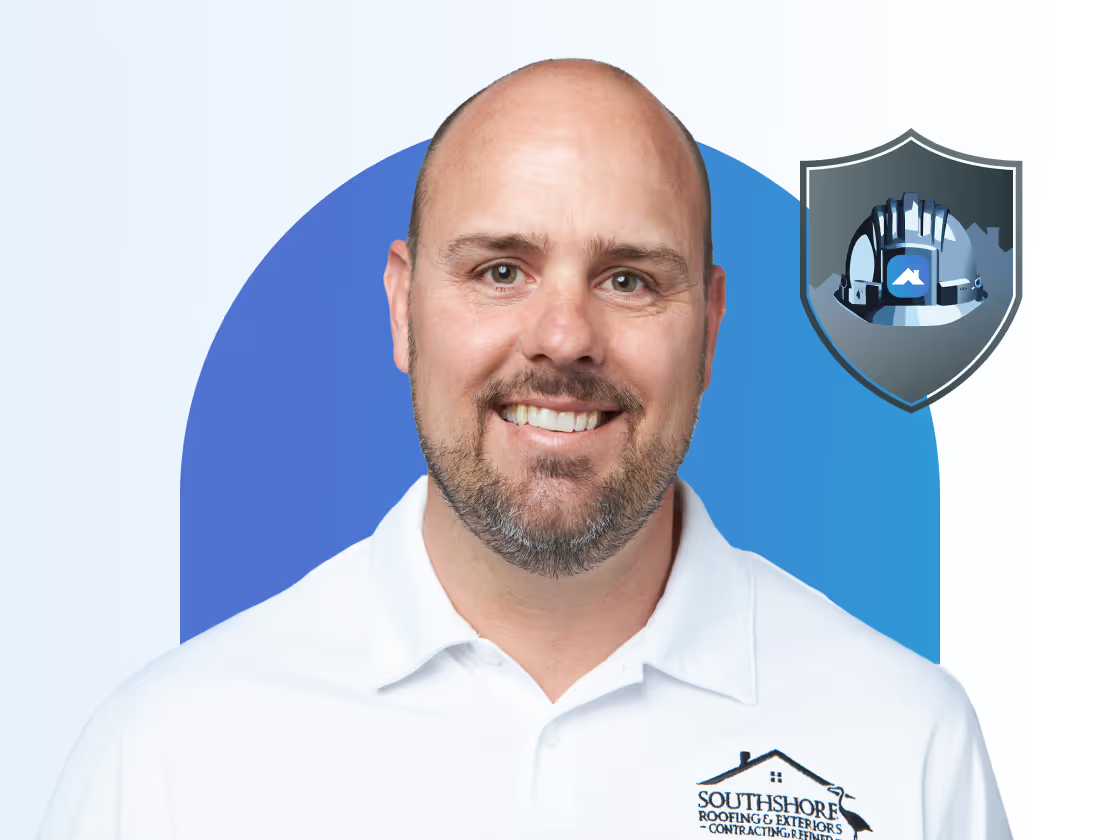
Building a Lasting Legacy: A Convo with Corey Combes
Corey Combes, founder and CEO of SouthShore Roofing in Tampa, Florida, shares his story. The Roofr Report is a roofing podcast, hosted by Roofr.


More episodes
.png)
Insights from a Roofing Manufacturer (w. Larry Sernick at CertainTeed)
Larry Sernick of CertainTeed shares his thoughts on the roofing industry from a manufacturers perspective. Hear his take on Class 4 shingles, solar, selling retail, and slow storm seasons.
.png)
Cross-Training Crews to Survive Buffalo Winters (w. Chandler Pedini)
Chandler Pedini, our October 2026 Roofr of the Month, cross-trains his in-house crew on other trades to keep them busy year-round. Check out his story.
.png)
Physio Advice for Roofers: How to Prevent Aches, Pains, and Injuries
Physiotherapist Colby Bucci shares tips on how roofers can stay fit and safe on the job. We're talking stretching, rest, recovery, and treating yourself like an athlete.
