


It's 2026. Speed, efficiency, and professionalism are key for roofing businesses who want to stay ahead of the curve (and stand out from the competition). Enter digital roofing proposals.
Comprehensive, detailed roofing proposals are how roofing contractors win over customers and make the sale. Homeowners don't want basic numbers scribbled down on a blank page. They expect a thoughtful visual package that lays out the job, breaks down pricing options, and shows them what they're getting.
After working so hard to build your brand, get the lead, and gather pricing, do you really wanna lose the job because your presentation sucked?
Today, there are excellent online tools that can help you put together beautiful roofing proposals quickly. It may seem like a small thing, but how you send and craft proposals is an absolute game-changer for your business.
In this article, we're covering:
- What makes digital proposals better
- What a great roofing proposal includes
- Picking the right roofing proposal software
- Following up and closing the job
- How to start using digital proposals ASAP
What are digital roofing proposals?
A roofing proposal is the document you send a homeowner to lay out the scope of work, materials, pricing, and terms for a job. You should think about it as a sales document, not a formality. It's the last thing a homeowner looks at before deciding whether to give you the job.
Some old-school roofing companies will write out proposals by hand, then scan and email it. Or they'll toss some numbers into an email and call it a day. That's not a real digital proposal.
Digital roofing proposals are proposals created, sent, and tracked entirely online. No handwritten forms, no back-of-the-napkin math, no poorly formatted Word docs. Proper digital proposals are made using software solutions like Roofr, with pre-filled templates, measurements, e-signature capabilities, and your branding baked in.
If you're still printing or scanning static PDFs, you'll leave homeowners unimpressed at best, and plummet your close rate at worst.
Your digital roofing proposal matters more than you think
There are tons of benefits to digital proposals over hand-written, but here's what it boils down to: they win over homeowners and land you more jobs.
Homeowners aren't just buying a roof. They're buying you. They need confidence that you know your stuff and won't disappear mid-job.
Your proposal's one of the clearest ways to prove your professionalism and commitment.
Research (including our 2026 homeowner survey report) consistently shows that price is NOT the biggest factor for homeowners in choosing a roofer. Trust is what moves the needle. Homeowners will always spend more for professionalism and trust.
So a crumpled one-page quote, scribbled on a notepad from your truck, ain't gonna do it.
.avif)
Using an online tool to build proposals helps you send documents that show care and attention to detail. Homeowners WILL use your proposal as a way to decide how your work will look. "Messy proposals? Messy installation." Job lost.
The many benefits of digital roof quotes
Aside from that #1 business case(they help you win more jobs), there are a few other benefits to digital proposals you should know about.
They save you time
With digital proposals, roofing companies can automate proposal creation. Order fast satellite measurements, generate accurate quotes swiftly, and free up time to focus on other parts of your business.
Roofing proposal templates = consistency
Good digital proposal software gives you a range of customizable templates, so you can make polished, professional-looking proposals without a lot of effort. Templates save time by automatically including your branding, terms, sales team contact info, and more. It'll save you from busy work and keep your quotes consistent, no matter which member of your team is handling it.
Easy to scale and grow
As your roofing businesses expands its operations, scalability—your ability to grow and duplicate a process—quickly becomes a huge deal. Digital proposal software lets you grow without complexity. Anyone in your company can create fast proposals without adding extra tasks to their workload. It streamlines your lead pipeline without sacrificing quality.
Stand out from the competition
Roofing is competitive. Standing out is key to success. Beautiful, modern digital proposals are a major edge to help you impress homeowners and stand out from the other guys.
Collect online payments
Many digital proposal platforms, including Roofr, integrate smoothly with online payment systems. Letting homeowners accept a job, sign, and make payments online is a big deal (and truthfully, it's the minimum expectation for most customers these days).
Improve your speed-to-lead
You can generate a digital proposal FAST. We're talking 5 minutes fast. If you have measurements, standard pricing, and a proven template in hand, you can pull your truck to the side of the road and get an accurate, amazing looking proposal over to a homeowner before your coffee even cools down.
Most of the time, first to get back to the homeowner wins. This improved speed to lead means more jobs won and increased revenue for the business.
Choosing your online roof proposal software
We're obviously biased; we feel strongly that Roofr's proposal tool is best. But you should explore your options and make the best decision for your needs.
When choosing software for digital proposals, here are some questions to ask:
How easy is it to use? Look for user-friendly and intuitive tools. You want a clean interface, drag and drop features, and clear proposal management.
Does it work with other tools? Pick a platform that seamlessly integrates with the other systems your business uses, like your CRM, roofing material ordering, project management, and online payment systems.
Can I customize the proposals? Make sure the software offers solid customization options, including templates, branding, and good / better / best pricing.
How secure is the software? When you choose a roofing proposal tool, remember that all your customer info will be stored in their database. So, security is vital. Prioritize software that takes data security and industry compliance seriously.
What support do they offer? Work with software as a service companies that are known for having great customer support, implementation, training resources, tutorials, and live assistance.
What should a roofing proposal include?
Just listing price and material type isn't enough. A good roofing proposal can achieve a lot. Even experienced contractors often leave money on the table, just by not taking a few minutes to add some basic details into their proposal template.
A complete roofing proposal should include:
- Scope of work: Be specific. Don't just write "reroof." Describe the job, how many layers, whether decking is included, clean up, all of it. The more detailed you are, the fewer surprises for the customer.
- Materials breakdown: List the specific products: shingle brand and line, underlayment type, ice and water shield coverage, ridge cap, ventilation. Homeowners may not know what a synthetic underlayment is, but seeing it listed reassures them you do.
- Measurements: Include roof measurements and dimensions in the proposal too. Homeowners love it, it signals accuracy and professionalism, and it stops competitors from lowballing you based on a vague scope.
- Payment terms: Clear line-item pricing is better than one big lump sum. Break out labor, materials, disposal, and add-ons. Include your payment schedule.
- Warranty info: List the manufacturer warranty and your workmanship warranty. Be specific about what's covered and for how long.
- Project timeline: An estimated start date and project duration (even if it's a range) sets expectations and shows you're organized. It only takes one bad past experience for a homeowner to be worried about timeline commitments, so it's best get ahead of it.
- Terms and conditions: Protect yourself. Include what happens with unforeseen damage. List cancellation terms and a dispute resolution process. Get a lawyer to draft this once, then use it on every document.
- E-signature capability: The faster a homeowner can say yes, the better. Don't make homeowners print, sign, scan, and email back. Use e-signature.
Digital roofing proposals by Roofr
Roofr's proposal tool was built specifically for roofing contractors. It's not a general-purpose thing. It's not adapted from some other software platform. It's built from the ground up for roofers.
Plus, it integrates directly with Roofr's aerial measurements, CRM features, instant estimator, payments, material ordering, and more, so you can go from measurement to proposal to work order to final invoice, all within one platform.
- Fully customizable roofing proposal templates
- Built-in e-signature and online payment options
- Automated follow-up prompts when proposals are viewed
- One-click conversion from proposal to other documents
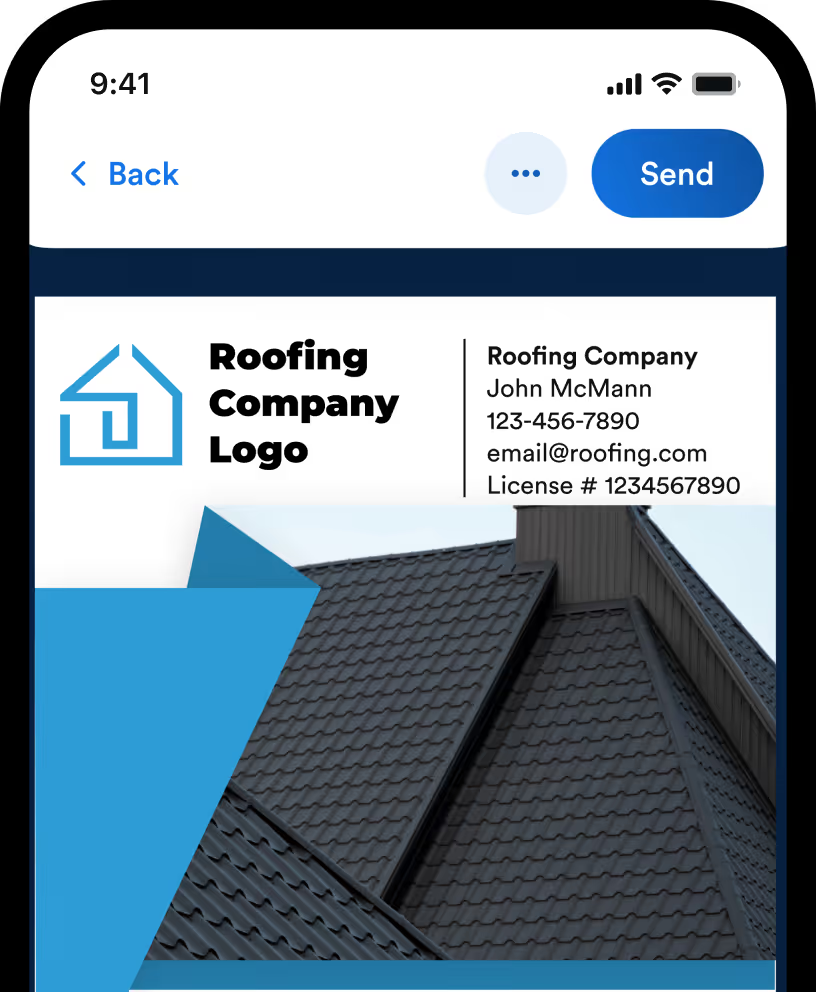
You can see a proposal example here.
Roofr's easy to use. It's secure. It's functional. And it's the only platform you need to run your roofing business.
Digital proposals and online roof quotes: A key to a successful modern roofing business
Digital proposals are a powerful tool for roofing companies looking to streamline operations and drive business growth. In fact, a great roofing proposal is one of the highest-leverage things you can invest in as a roofing business. It affects your close rate, your perceived professionalism, your speed to revenue, and even your post-job experience.
With digital proposal tools like Roofr's, you can save time, improve efficiency, and stand apart in a competitive market. Don't stand in your own way: give digital roofing proposals a shot. You'll wish you'd made the jump years ago.
Ready to wow your customers? Register for free today, or book a call with our team to see Roofr in action.
Frequently asked roofing proposal questions
What should a roofing proposal include?
A complete roofing proposal should include: a detailed scope of work, a specific materials breakdown, roof dimensions, itemized pricing, payment schedule, project timeline, warranty details, and terms and conditions. It can also include photos or mockups, additional business info, e-signature capability, and more.
What's the difference between a roofing estimate and a roofing proposal?
An estimate provides a rough idea of what a job might cost. A proposal is more complete. It outlines the full scope of work, materials, pricing, and terms. The proposal is usually what the homeowner signs to approve the work in writing. In practice, you'll want to use an estimate to qualify a lead, then a full proposal to close. Roofr's Instant Estimate tool helps a lot for that early qualification step.
Is a roofing proposal the same as a roofing contract?
It's up to you whether you want these to be two separate documents or not. A roofing proposal outlines the work and what it costs. A roofing contract is a legally binding agreement, including the full terms and conditions of the job. Many roofers combine both into one document.
How do I send a digital roofing proposal?
To send a digital roofing proposal, create the proposal in a platform like Roofr, then send a link via email or SMS text message. The homeowner can view, ask questions, and sign from their phone.
How do I make my roofing proposals stand out from competitors?
A few things separate a winning roofing proposal from a forgettable one: detailed, specific scope of work, a clear materials breakdown, professional formatting and your company branding, clear warranty info, and an easy signing experience.
How quickly should I send a roofing proposal after a site visit?
Same day is the gold standard. Response speed is one of the top factors in winning residential roofing jobs. If a homeowner gets three quotes, the first trustworthy-looking proposal they get is most often they one they'll go with. Digital proposal tools make that same-day turnaround very doable.
How to follow up on a digital roofing proposal?
This is an important step not to miss. Don't just send a proposal and forget about it. Check in with the customer after 12 to 24 hours, or use automated email/SMS follow-ups after the proposal is sent. That gentle push will often win a roofer the job. Contractors can lose a lot of potential work just by not following up.
What's the best app for roofing proposals?
Platforms like Roofr, JobNimbus, and Jobber are the most commonly used for roofing proposals. Roofr combines measurements, proposals, e-signature, payments, and more into one workflow, eliminating the need for multiple tools.
Can I collect payment through a digital roofing proposal?
Absolutely. Platforms like Roofr let you collect a deposit or full payment directly through the proposal link, so there's no separate invoicing step.
How does Roofr's proposal tool work?
Roofr's proposals are built into its full roofing CRM, so they connect directly to your leads, measurements, and payments. After running a roof measurement, you can generate a branded proposal in minutes. Homeowners get the proposal digitally, can review it on any device, and sign electronically without extra steps. Once approved, the proposal converts directly to a work order, material order, and invoice.
Can Roofr handle more than just proposals?
Yes. Roofr's a full roofing business platform. It covers the whole workflow: CRM and lead tracking, aerial roof measurements, instant estimates, digital proposals, invoicing, online payments, material ordering, and job scheduling. If you're currently using a bunch of different tools for this, Roofr replaces them. Start for free to see for yourself if it's the right fit.