


Roofing has a reputation for being a tear-it-off, throw-it-away industry. And sometimes, that's exactly what a roof needs. But other times, the roof is fine — structurally sound, no leaks, just a little wear and tear. That's where roof coating comes in.
Roof coating has been around for decades. It’s growing fast in the commercial market, and is one of the best ways to add a high-margin offering without buying a single new tool.
Whether you're new to coatings or just want to sharpen your pitch, this guide covers everything you need to know about roofing coating: what it is, which type to use (and when), what it costs, and how to apply it correctly.
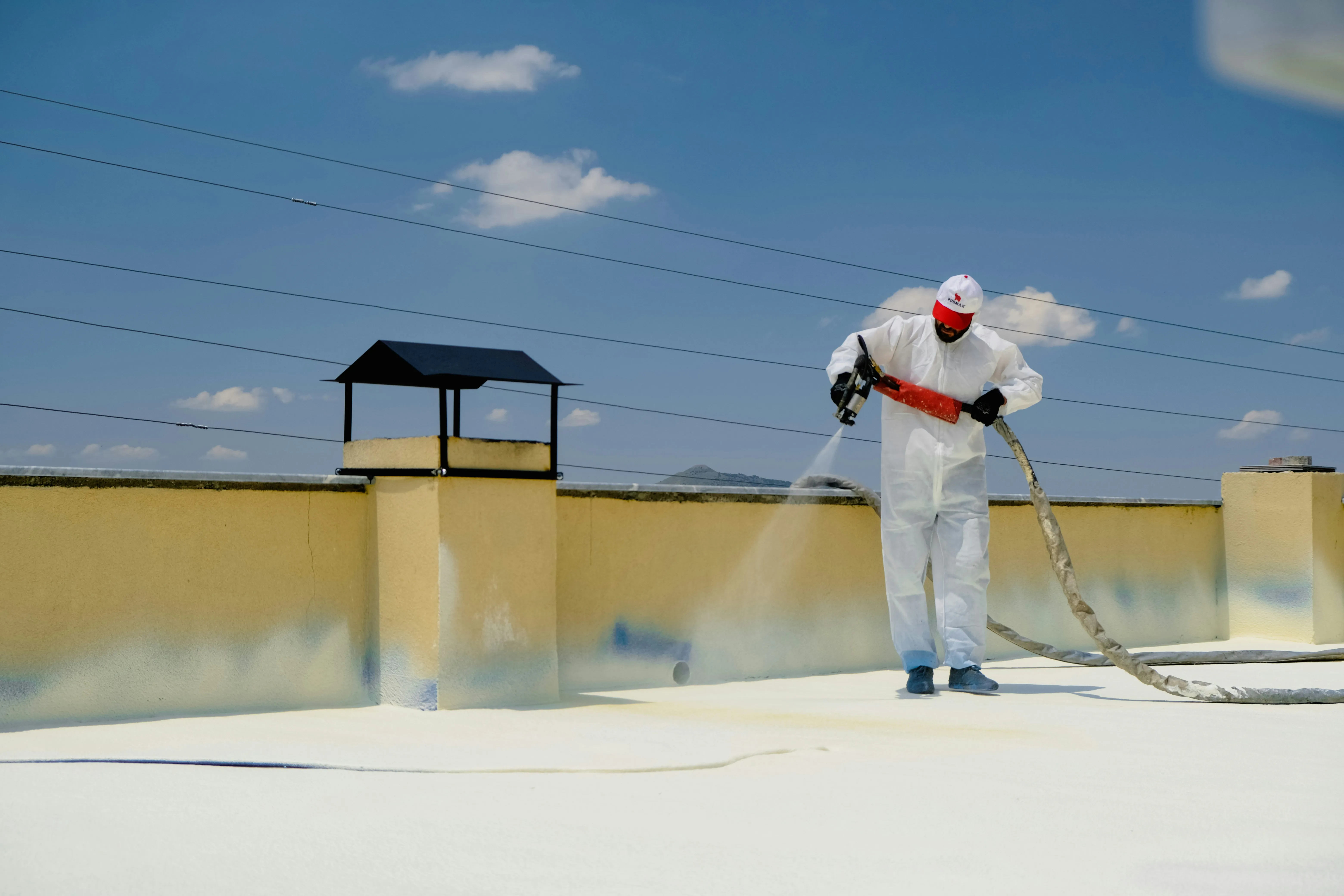
What is roof coating?
Think of roof coating as SPF 100 for a commercial roof. It's a fluid-applied protective layer — rolled, brushed, or sprayed onto an existing roofing surface — that cures into a seamless, flexible membrane bonded directly to the substrate.
It’s not a patch. It’s not a band-aid. And it’s definitely not a way to hide a roof that's already given up.
But when the timing is right and the substrate is sound, a roof coating waterproofs the whole surface, bounces UV rays back into space where they belong, and can add 10 to 20 years to a roof that would otherwise be headed for a full replacement.
For contractors, that's a compelling pitch. Coating jobs typically run a fraction of a re-roof, but the margin per square foot is solid, and building owners love hearing they can defer a six-figure capital expense.
But coatings only work when the roof underneath them is structurally intact. Slap one on a failing deck or over saturated insulation and you've just waterproofed the problem, not fixed it.
Types of roof coatings
The roof coating aisle isn't one-size-fits-all. Choosing the right product comes down to the substrate, the slope, the climate, and how much foot traffic the roof sees. Here's the full lineup:
Acrylic roof coating
Acrylic is the crowd favorite. It’s water-based, easy to apply, affordable, and available in enough colors to make any facilities manager feel like they have options. Acrylic reflects UV extremely well, which makes it the go-to for sloped commercial and residential roofs in hot, sunny climates.
The one thing acrylic hates: ponding water. Leave it sitting in a puddle longer than 48 hours and it starts breaking down faster than a promise from a sub. Sloped roofs or well-draining flat roofs only.
Best for: Metal roofs, sloped commercial roofs, budget-conscious jobs in hot or dry climates.
Silicone roof coating
Silicone is the flat roof specialist. It doesn't absorb water, crack under UV, or chalk. It just sits there, looking unbothered, repelling whatever the sky throws at it.
There are two things worth telling your clients upfront: silicone is slippery when wet (not great for roofs with foot traffic), and nothing bonds to cured silicone except more silicone. Once you go silicone, future re-coatings are also silicone. That's not a dealbreaker, but it is a commitment. Make sure homeowners know what they're signing up for.
Best for: Flat and low-slope commercial roofs, ponding water situations, EPDM, TPO, and spray polyurethane foam (SPF) substrates.
Polyurethane roof coating
Polyurethane is the tough guy of the coating world. It comes in two forms: aromatic (base coat, UV-sensitive) and aliphatic (topcoat, UV-stable). Together they form the most impact-resistant and abrasion-resistant coating system available.
If the roof gets regular foot traffic, has mechanical equipment, or sees maintenance crews on a monthly basis, polyurethane is the right call.
Sure, it costs more. But it also lasts longer and takes more of a beating. On the right job, it earns the premium easily.
Best for: High foot traffic roofs, rooftop equipment areas, regular maintenance access situations.
Bituminous / asphalt-based coating
Bituminous coatings have been around longer than most of us have been in roofing. Made from refined coal tar or asphalt, they're used primarily for waterproofing concrete roofs and foundations — and for re-coating existing coal tar built-up roofs (BUR).
You won't spec these on many new projects, but if you're working on an older commercial building with a coal tar BUR, it's exactly what the job calls for.
Best for: Concrete roofing systems, existing coal tar built-up roofs, waterproofing applications.
Roof coating comparison table
Roof coating benefits (and what to watch out for)
The upside:
Coating generally buys a roof 10 to 20 more years. That’s the main selling point. A properly applied elastomeric coating gives a structurally sound (but aging) roof a second act, and keeps a full replacement off the table for a decade or more.
Energy bills drop. Reflective white coatings bounce solar energy back instead of letting the building absorb it. In commercial buildings, that cooling cost reduction adds up fast and gives you another angle for the ROI conversation.
No tear-off. No landfill fees. No shutting down operations for a week. Coating over an existing roof is faster, cleaner, and far less disruptive than a full re-roof, which is exactly what building managers want to hear.
The cost is a fraction of replacement. Coating jobs typically run $1.50 to $4.50 per square foot installed. Compared to $6-12 or more per square foot for a full re-roof, that’s significant savings. On a 20,000 sq ft roof, that's the difference between a $60K conversation and a $180K one. Know which one's easier to close.
Potential energy efficiency incentives. Reflective coatings that hit ENERGY STAR performance thresholds may qualify for tax credits or utility rebates. Worth mentioning to commercial clients. It's free money they probably don't know about.
What to watch out for:
Coatings fix surfaces, not structures. Saturated insulation, deck rot, or substrate failure cannot be coated over. If you recommend a coating on a roof that needs a replacement, that coating job becomes your problem when it fails.
Surface prep isn't optional. A coating applied to a dirty, wet, or unstable surface will fail. No doubt about it. Don't let a tight schedule talk you into skipping prep steps. That's the fastest route to a warranty claim and a very unhappy client.
Silicone means silicone forever. Say it upfront so there are no surprises at the next re-coating conversation.
When to use roof coating (and when to walk away)
Timing is everything in roofing. Same goes for coatings. The sweet spot is a roof that's past its prime but hasn't hit the wall yet. It’s probably worn, weathered, and showing some minor surface cracking. But structurally, it’s holding on.
Good candidates:
- Flat or low-slope commercial roofs with early surface weathering, minor cracking, or chalking (but no deck issues)
- Metal roofs with surface oxidation or small seam gaps (no active rust-through)
- Roofs in the 10-to-20-year range that are structurally intact but losing their top-layer performance
- Building owners trying to defer a major capital expense by a decade
- Hot or high-UV climates where energy savings help justify the investment
Walk away from:
- Roofs with saturated or failing insulation — moisture under the membrane means the coating is just decorating a problem
- Substrates with active structural damage or deck failure
- Roofs where ponding water is a chronic drainage problem the coating type can't handle
- Gravel-surfaced roofs where the surface hasn't been properly prepared (adhesion will fail)
If more than 25% of the surface area needs repairs before coating, the economics of a full replacement start to make more sense.
Roof coating costs
Here's what the numbers look like in 2026 ($USD), broken down by material and installed price per square foot:
(Always take these numbers with a grain of salt — location and supply chain issues can dramatically impact prices)
Factors that push the number up: roof access and height, the extent of surface prep and repairs needed, primer requirements, number of coats, and local labor rates.
How to apply roof coating: Your step-by-step guide
Getting the application right is what separates a coating that earns you a referral from one that earns you a callback (the bad kind). Here's the standard process:
Step 1: Inspect and assess
Walk every inch of the roof. Document ponding areas, cracked seams, deteriorated flashing, and any soft spots that might signal saturated insulation underneath. Take photos. They protect you, and they justify your scope to the client when they ask why the prep bill looks the way it does.
Step 2: Repair before you coat
This one isn't optional. Open seams, splits, and penetrations need to be addressed with compatible sealant or reinforcing fabric before a drop of coating goes on. Flashing is where most coatings fail. Check it twice, and fix what needs fixing.
Step 3: Clean the surface
Pressure wash at 2,500 to 3,500 PSI using a 30-degree tip. Remove all debris, biological growth, dirt, and anything else that doesn't belong up there. Then let it dry completely. A wet substrate is an adhesion failure waiting to happen. On metal roofs, treat any surface rust before moving on.
Step 4: Apply primer (if required)
Some substrates — EPDM, TPO, and chalky metal in particular — need a primer for the coating to bond correctly. Check the manufacturer's spec sheet for your specific coating and substrate pairing. Skipping primer to save two hours is one of the most likely ways to end up back on that roof in 18 months.
Step 5: Apply the first coat
Use airless spray equipment (minimum 3/4 gal/min at 3,300 PSI) or a 3/4-inch nap roller for smaller or tighter areas. Apply at the manufacturer's specified wet film thickness — typically 20 to 30 mils. Keep the nozzle 12 to 18 inches from the surface for even coverage.
Step 6: Apply the second coat
Let the first coat cure (minimum 6 hours, more in cooler or humid conditions). Apply the second coat perpendicular to the first to ensure uniform coverage. Most manufacturers require two coats to hit minimum dry film thickness for warranty compliance, so don't try to do it in one heavy pass.
Step 7: Inspect and document
Walk the finished surface. Check for holidays (missed spots), thin areas, and anywhere around penetrations that might need a touch-up. Then take your after photos. If a warranty question ever comes up down the road, you'll be glad you did.
Roof coating: A smart move for a quick refresh
Roof coating isn't the right call for every job. But when the substrate is sound and the timing is right, it's a smart move. Roof coating extends the life of an existing roof by a decade or more, keeps a full replacement off the table, and gives building owners a cost-effective way to protect their investment. Master the product selection and nail the prep work — then roof coating becomes a reliable, high-margin service you can offer on almost any commercial job.
Roof Coating FAQs
What is roof coating, and how does it work?
A roof coating is a liquid-applied membrane rolled, sprayed, or brushed onto an existing roof surface. It cures into a seamless, flexible layer that waterproofs the roof, reflects UV radiation, and extends the life of the existing system without a full tear-off or replacement.
How long does a roof coating last?
Most elastomeric roof coatings last 10 to 20 years when properly applied and maintained. Silicone coatings tend to hold up best in high-UV environments and anywhere ponding water is a regular occurrence.
What's the best roof coating for a flat roof?
Silicone is generally the best choice for flat and low-slope roofs. It handles ponding water without breaking down, which acrylic cannot. If the roof sees a lot of foot traffic, polyurethane is worth the premium.
How much does it cost to coat a roof?
Installed costs typically range from $0.50 to $4.50 per square foot depending on coating type, surface prep, and roof size. Acrylic is the most affordable. Silicone and polyurethane cost more and perform better in demanding conditions.
When should you not use a roof coating?
If the insulation is saturated, the deck has structural damage, or more than 25% of the surface needs repairs before coating, skip the coating conversation and talk replacements instead. It's a harder sell in the short term, but a much better outcome for everyone long term.
What's the difference between elastomeric and non-elastomeric roof coatings?
Elastomeric coatings — acrylic, silicone, polyurethane — can stretch and bounce back, which lets them handle the thermal expansion and contraction a roof goes through every single day. Non-elastomeric coatings like bituminous are more rigid and best suited to specific substrates like concrete or existing coal tar BUR roofs.
Can a homeowner apply roof coating themselves?
On a sloped residential roof with an acrylic coating, technically yes. On anything commercial, or any job requiring warranty compliance, the answer is no. Coating thickness and adhesion requirements are not forgiving of guesswork, and improper application is the number one reason coatings fail early.