

No Customer Left Behind: Putting Community First with John & Carrie McClung
Summary
After nearly 22 years in business, John and Carrie McClung have a clear philosophy: “We don’t live to roof. We roof to live.”
To celebrate our March Roofr of the Month winners, Pete sits down with John and Carrie McClung to discuss how success arises from taking an active part in the roofing community. From disaster response to backpack giveaways to breast cancer fundraisers, McClung Roofing has built a business rooted in service.
In this episode:
- How community investment fuels long-term growth
- Why reputation beats price
- What legacy really means in contracting
It's a story about business, but also heart.
Transcript
John: Could do 30 estimates a day from my desk, and we sold jobs that we never even saw until we showed up to Doodle. I could have never done 30 quotes a day with a pencil. It just wouldn't have been possible.
Pete: You are listening to the Roofr Report, the ultimate podcast for roofing professionals, business owners, and entrepreneurs.
Get insider access and hear about the highs, lows, and tails of triumphs from thriving business owners. Brought to you by Roofr, hosted by Pete McKendrick.
All right. Hey everybody. Welcome back to the Roofr Report. I'm your host, Pete McKendrick, and uh, we are back with another Roofr of the month. This has been an incredible series for us that we've done here over the last two years, and, you know, we've talked to some incredible Roofrs, everybody from people who have started companies a few months ago to people who have been in business for a long time and you know, some legacy businesses.
So we're super excited here today to hear the story from a duo here that I was happy to meet. Welcome to Carrie and John McClung. Welcome guys.
Carrie: Hi. Hey, thanks for having us
Pete: a couple years ago and, and when I was able to kind of learn a little bit about the company then. But, um, I know you guys have been, uh, great users of our product and, uh, you know, and have had a lot of input in, into the way our product has evolved, you know, over time.
And I see your names pop up quite often, people talking internally saying like, oh, I talked to them. You know, so, so super excited to dive into it here. So tell us a little bit about UNG Roofing. Uh, how long have you guys been in business? How big are you? Like how many employees do you have? That kind of stuff.
John: Yeah. We've been in business 21 years, I believe. I had roofed for a summer and went on to do other things. I became a machinist and I made jet engine parts for years Oh wow. Until September 11th happened and nobody wanted to fly. And, uh, about 200 of us lost our jobs. I ran a, a roofing company briefly for a guy that I knew he was crooked.
He gave terrible advice and it just lacked the integrity for me to stay. So I quit and I took two of his guys and I started a little roofing company and that was, uh, a long time ago. It was a lot of hard work in the beginning. It's still hard work, but it's more streamlined.
Pete: Yeah, it's always interesting to talk to companies that have been in business as long as you guys have, 'cause you're, you know, like I've been on the roofing side now eight years and I've seen.
An incredible evolution of the way roofing companies are made and the, the money that they make and the technology that they use. And so I can only imagine what it was like 21 years ago versus today. For you as a roofing owner, right. The
Carrie: shingles square price is whoa. Different than it was
Pete: 21. Yeah, that's very true.
John: $35 a square, turnkey. My shingles were $35 a square.
Pete: Yeah, that's great.
John: Crazy.
Pete: Yeah, crazy. The difference. Right? And there were probably was very, very little if any technology used at that point, right?
John: Oh, that's right. I was using, um. I bought my bid books at Staples or Office Depot. I had a rubber stamp made with my name on it.
I would stamp the top of it and hand write every quote. And we barely evolved from that before we, uh, found Roofr. In fact. So two years ago, we were typing up bids, uh, in Word and sending 'em to our customers. And we discovered you guys and it revolutionized how fast we could do a quote and how accurate and generate a material list.
We were handwriting them two years ago. Our material is,
Pete: it's crazy because you think about it, right? Like if the old saying, like if it's, if it don't, if it's not broke, don't fix it. Right? And you guys were obviously successful for a very number, you know, a long number of years doing it that way. Back when I first started, you know, a lot of contractors were in a similar situation, right?
I've been in business 18, 20 years, you know, I've been doing it like this. I'm successful like this. So I find it very interesting. What was the catalyst to make you guys decide to look. Tech, you know, because obviously you were successful the way you were. Carrie was. Yeah,
Carrie was the catalyst.
Carrie was the catalyst.
Carrie: I could see that this was not sustainable to continue doing it the way we were doing it. And you know, when John started, he was chucking a truck. Literally. He was a one man show. He answered the phone going down the road. Yeah. You know, he was, there was no one but John, he, everything. And I had my own career.
I was doing some, you know, something else, although I kind of helped with the books a little bit at home. And every night about seven o'clock, John would have to go down to his office and work on tomorrow's to-do. After he received all the pictures of handwritten notes from the guys. Um, and I, so every night, if we were at, you know, we'd have to make sure we were home from dinner every particular time, or if we wanted to watch a movie, we had to wait till, you know, he was done with his nightly to do list for the next day.
And I was like, this is not sustainable forever. Um, and we gotta, we gotta figure out another way. And he did not, you know, he was like, this works and I know it works. I don't know. So we looked at ACU links several years before you were on the scene, and he couldn't wrap his head around how that could maybe work.
He, and we just skipped it. We was like, he's not, he wasn't ready. He wasn't ready for technology at that time. And that was a good five years before Roofr came on the scene that we looked at it and decided against it. So then I was like, okay. This still. We gotta figure something out here. Um, and then we were going to roof con and I was like, okay, we're going to roof Con, let's look at some other options.
We looked at Job Nimbus and others, some of your competitors while we were there. And, um, bounced from Booth to Booth figuring out what can we do and what can John live with. And, uh, ultimately we decided on you guys and um, now John would never turn back.
John: That's right.
Carrie: You could never go back to that nightly list ever.
Pete: Yeah.
John: Yeah. We had a huge surge in work, um, last year, and I mean, you're familiar with Helene and all the things that happened. We got the worst of that.
Pete: Yeah. You guys were ground
John: zero for
Pete: that kind of, yeah.
John: Yeah. Our customers were so gracious too. Um. Makes me wanna cry a little bit, but they would cry on the phone and then we would too, you know, it's hard, but Yeah.
Um, but anyway, I could do like 30 estimates a day from my desk and I would send them to people and say, I know you need your estimate. I'm happy to come see you. Um, overjoyed to, but I can get 30 people what they need from here. Or I can go see five or six of you. And we sold jobs that we never even saw until we showed up to do them.
Pete: Oh, wow.
John: It, they would just sign it and send it back. We had a good name already in the community, but I could have never done 30 quotes a day with a pencil. I just, it wouldn't have been possible initially. It released some free time after we got used to it, and then it allowed us to do the work of three or four people, you know.
Yeah. Revolutionary for us.
Pete: Yeah. And, and we kind of breezed over that at the beginning, but you guys are based out of Asheville, right? And so, um, obviously Helene had a huge impact on you at that area. Right. And I, I came through there, I wanna say about maybe six or eight months ago we drove through there, coming from Florida and, you know, just, I mean, still, you still see it, right?
Every day there. And so it's interesting that you guys were able to potentially help more people, right? Because of having the technology involved and, and being able to access, uh, it quicker, you know, and get things done a little quicker. So, yeah. Very cool.
Carrie: Yeah. Particularly with even like some roads you couldn't even access someone's home yet to go out and look, you know?
True.
Pete: Yeah.
Carrie: Yeah. There's some rural areas that are still not completely accessible, so
John: pretty
Carrie: crazy. Yeah.
John: There were, um. Trees across the road that I had to climb over. I had to park a half mile away from one house and climb over trees with my ladder and they had no power. They had a, a tree through their roof and it was just so, the scale was so big.
Yeah. It wasn't one unique,
Pete: it
John: wasn't a neighborhood. You really did a number on your house. It was neighborhoods.
Pete: It's funny, I talk about how, you know, we moved here about a year and a half ago to Kentucky and we were hit with a hailstorm, which was very out of the ordinary here, and there's. Tons of houses damaged.
Right. And Roofrs are saying like, oh, it's gonna be five years before we can get everybody's house fixed. You know? And, and I think that was just a little hailstorm in comparison to what you guys had, you know, I mean, like you said, trees through roofs and things, a much, much more catastrophic event than what we experienced.
So I can only imagine the extent of the damage and the amount of people, you know, in need of some significant help. Right.
John: Yeah. We had a, we had a friend that was rescued off of her roof. The water was up to her soffit.
Pete: Wow.
John: And had another friend drown. So it was just crazy. Very sobering. And to have no power.
Some people didn't have power for three or four months. It just,
Carrie: and water, the city's water system had been, it
went
John: down. Yeah.
Carrie: Just completely compromised. So something we were able to do as a company during that time was, um, where our office is in a home outside of the city and we had a well, and so we were able to open it up to the community and let people come do showers and laundry
Pete: Oh wow.
Carrie: Um, in inside of our office building and, and we had power. We got power back pretty quickly. So we were able to be up and running pretty quickly compared to a lot of other people and continue serving. Community with roof needs as well as water. And
John: yeah, we had two showers and a laundry and we would block off two hour blocks for families and kept its own calendar and people would come in.
We still had the living room in the house with a TV and a couch, so the kids would sit in there and watch tv. Mom and dad would shower and do laundry. Uh, that's pretty cool. It was pretty, um, arm in arm kind of.
Carrie: It's one thing that we use our roofing company to serve the community. That's part of our, our philosophy and the way we run our company.
Um, and we're kind of taking a pivot on, you know, what our company is about. But yeah, so that, that's just kind of our worldview. You know, we don't, we don't live to roof.
John: Right.
Carrie: You know, roof is just how we. How we fulfill what we're supposed to do in, in this world. So
John: we roof to live and to love people as well.
Pete: Yeah, I mean this is great because this is, you know, something that we talk about quite often is, you know, I think an overlooked part, and I think more and more Roofrs are starting to realize it, but you know, as like being that neighborhood Roofr, right? Is being that person in your community. Um, you know, that these people can look to as a trusted company, as a trusted authority to help them in a situation of need.
Right. You know, uh, I saw it here, you know, just a little hailstorm and it just flooded with people from out of town and, you know, one of the local Roofrs, you know, made a couple posts on Facebook and just said like, Hey. Think about it like this. If that person comes in, they may give you a better price and they may fix your roof.
But if six months from now your roof is leaking, do you really think that person is coming back from a thousand miles away to help you versus me who has an office down the street and, and you got me thinking, you know, like how important it is to have that. Community relationship as the Roofr, but also for the customer, right?
How important it is to have that person just be down the road, right? And then for you guys to be able to do some stuff like that for the community and give back, um, you know, it's just a huge, huge part. Just shows like how much you as a company, care about the community as a whole. And, uh, you know how ingrained in it you guys really are.
Yeah.
John: Hey Gary. Talk about some of our outreach stuff that we do.
Carrie: Yeah. We, um, every October we do a breast cancer for a local nonprofit fundraiser. So based on our sales in October, we give, you know, a percentage to a local nonprofit for breast cancer. We do a backpack giveaway school at school time in August.
John: Right. We did like a thousand backpacks. Wow.
Carrie: Yeah, we huge turnout this year and we, Walmart actually jumped in and donated money to help give backpacks, so. Oh, wow.
Pete: Very cool.
Carrie: Our daughter's our marketing person and she's a networker, so you know, she's going to the chamber meetings and telling people what we're doing and people wanna get involved and we're like, there's a lot of people who wanna serve the community and partner with other businesses.
And so that kind of opened up this past year and with Helene. People were a lot more community minded Sure. Than, um, it had been. And so that's something we do. And you know, we just did a Christmas, um, shop at a local elementary school so the kids could earn jingle bills and buy for their families and just, we just like to do things that aren't necessarily our target demographic.
They're not gonna buy a roof from us.
Pete: Right, right.
Carrie: But potentially, you know, but people don't care really about your roofing skills. Not at the end of the day, they wanna know, like, that's a company that cares about people. So when I need a roof, I wanna go for the guy who, uh, my sister had breast cancer. So I, they're supporting breast cancer.
I wanna
Pete: Yeah.
Carrie: Support them, you know? So it's marketing, but it's also our heart. It's just what we do. But a lot, a big chunk of our marketing budget goes to the community.
Pete: Well, it's huge, right? Because it's, you know, still so much of our business too is word of mouth referrals, right? And, and the fact that you guys are trusted in the community and they know you're gonna give back and you're a part of the community, right?
Is, is gonna go a long way. Like you said, maybe those people will never buy a roof, but if someone ever asks them about a roofing company. Guess whose name they're gonna remember, right? And so
Carrie: John will go in the bank and they'll go, you gave my kid a backpack last year. And you know, that's
Pete: awesome. Yeah.
Carrie: They might be a renter, they're never gonna buy a roof, but they remember that so
Pete: well. And it's just great that you're able to leverage the company in that way and be able to give back to the community as a whole. Right. Whether it ends up being a, you know, leading to a sale or not, you know, the fact that you guys are able to, to utilize the company in that way is fantastic.
Carrie: We love it. If we didn't have that part, I don't think we would. Feel fulfilled in what we do. You know? Yeah. We're keeping people's families safe and dry. That's in our little jingle, our marketing, you know, to keep your family safe and dry. John McClung, roofie, you know, I'm not gonna sing it for you, but, um,
John: why
Carrie: not?
But, uh, it'll be in your head all day if I do, but yeah, it works. Hey, other Roofrs, jingles work. There's not anybody else in our market. I don't think that has a jingle, but it has been one of the best things we've ever invested in. Other than the community.
Pete: I like that. Yeah. Yeah. It's just memorable, right?
We
John: turned it in, we turned it into a TV commercial, so they use the same jingle and put television to it, so it's, it's pretty neat.
Pete: That's pretty neat. Yeah.
Carrie: John has a sense of humor too. So our, our advertising also often has humor, so at the end of the TV commercial, he's got pretty white teeth. There's a little, a little, uh, sparkle.
Sparkle. People love
Pete: that. Yeah. All that stuff is memorable stuff. Right. You know, it's stuff that, you know, those people in their head, they'll remember all that stuff, so Yeah. That's great.
John: I even have the bouncing ball so you can sing along.
Pete: Learn the jingo. Right.
Carrie: I tell my daughter all the time, I'm like, listen, every now and then we have to have something roofing related on our social media.
It doesn't look like we're roofing up here sometimes.
Pete: Yeah. I think that that's a huge piece though, right? It is like, yeah, it's great to showcase the roofing, but really people by people, right? And they're gonna, right. They want to trust you as a person and the fact that they see that side of you guys and get to know you or feel like they get to know you ahead of time.
I think that's. Bigger sometimes than the, than the roof. You know, like, uh, I had a, a contractor say to me one time, he is like, Hey, look, at the end of the day, we're all pretty good at putting on roofs for the most part, right? Most companies are pretty good at putting on roofs. We're all pretty much putting on the same material.
So what sets us apart, right? It's, it's us as a people, you know, they're, they're buying the people, you know, they're buying the trust, they're buying the relationship more so than they are buying the roof. And so, you know, the fact that you guys have got them kind of buying into us people and understanding who you are, uh, I'm sure goes a long way, you know, in the community and, and, and in your sales.
So, yeah. Very cool. So, John, I got a question for you. So 21 years, obviously you've seen a lot, you know, what was some of the challenges that you faced early on? I mean, obviously they're gonna be a bit different 'cause you were doing some, you know, doing things a little differently than you guys are now.
But what were some of the biggest challenges that you faced? As the company has, has grown over 21 years.
John: Well, right out of the gate, I'd been married one minute when I started a roofing company, so now we got
Carrie: married and started the company in the same year, so
John: Oh, wow. I had a brand new wife and I had a brand new company.
And I felt like I needed to take every phone call, whatever time it happened, because the first few years we borrowed our way through the winter and then we spent the summer paying it back just in time to borrow it again.
Pete: Yeah,
John: it was hard. Um, and so I was doing easily 12 hour days, 14 hours. I'd still be at my desk at nine o'clock at night and get up and leave at six in the morning.
Um. Sometimes, usually seven. It all revolved around me. That was the hard part, that when you're so small you can't delegate, you don't have anybody.
Pete: Right.
John: When I got a little bit bigger and I really got burned out and I wanted to quit, I had a job offer, um, that was decent. And I told Carrie, I said, I'm just so spent.
And she said, well, take Tommy. He's your best guy, and let him do some estimates. If he can't do it very well, then you can close. Alright. We just continued to grow. We've, we've grown every single year. Even in oh eight, we were growing fast enough that even with the recession, we made more money in oh eight than we did in oh seven.
Pete: Mm-hmm.
John: By just a few thousand dollars. But our trajectory was massive. So I delegated to my first guy and I let him go do estimates and I spent more time at home. And then it got big enough that I was really busy again, and I basically built another job for the next salesman. So I let, I hired another one, and then I went back home.
So I've, I've tried to hire people for everything, and then if something's necessary, I'm the guy that fills in because nobody wants to be hired for two weeks because your project manager's out with a baby.
Carrie: Right.
John: So, so I'm the guy that I'll go project manage, you know, and then I'll go do a sale and I'll go do these things.
Um, so that's, that was the hard part was everything was me. I paid the material bills. I called all the customers. I answered every call, and I, I had everything I needed to do in a spiral notebook in order at the end of the day, it wasn't in order and things were, um, added. I had a second spiral and I would rewrite everything I had to do in order again, every night, book to book.
And that, that's the part I didn't want to give up because I knew everything. I read it every day until it was done. I wrote it every day until it was done. So I, I was really on top of things. I don't feel as on top of things now, but I have people to be on top of things. So, um, that was the shift that, that.
Help us get outta that hole.
Pete: Yeah, and I think that's the hardest part, right? Like, because when it's your baby and you've essentially your company, right? It's very difficult, obviously to let go, right? You wanna stay in control of as much as possible, and I get it. Yeah, it makes total sense. But I think finding those people is a huge piece, right?
Being able to find people that you trust and. People that buy in. I mean, obviously you guys, with what you're doing with the community and stuff, I'm sure you guys have a great culture internally so that it's allowing, you know, those people that to be bought into the, the idea, you know, the of the company.
And what would you say, and I ask this question to everybody and um, yeah, the answers are always interesting, but what would you say was probably the most important hire that you made in the life of the business?
John: Tina Hill.
Carrie: Tina Hill is our, I always seen her name with the Roofr feedback also, but, um, she was my very first hire.
Like I, I didn't really get in, involved involved until like 2013. Um, we'd been in business six, seven years already, and then I started getting more involved in the office. And, um, a little before that. But anyway, Tina, I was like, I need some help. It's been you for a long time, and now it's just me doing this part and I, and I can't, I need a little help.
And so I hired Tina in 2013 and she's still with us. She's my first hire. She's still with us. She's family now. And, uh, so we could do it without Tina. So she, she's been our. Right hand woman since 2013. So,
Pete: so is she like an operations, uh, person or internal like office
Carrie: manager? Yeah, she's the office manager now.
But really, she could also be called operations. She's, she knows, she does a little bit
Pete: of everything Yeah.
Carrie: Know for the internal systems and, um, wants to learn. She'll, she loves Roofrs. She, she did, uh, the masterclass. Last month, I think it was with, um, Nick, we both did that. And, um Oh yeah. Yeah. Just loves,
Pete: loves
Carrie: to give the feedback and you know, if she doesn't know it, she'll watch a YouTube video or, you know, she'll figure it out.
She doesn't wanna go do it, but she wants to know how to do it. So she's been a huge asset. We have a few others we have, we don't have turnover really. So, you know, both of our kids work for us.
John: Jesse's been with us 11 or 12 years. He does estimates as well and repairs.
Pete: That's actually pretty incredible, right?
Because if you think about it, I, I think that most roofing companies that you talk to, that's their biggest hurdle, right? Is the, is labor getting people that they can trust, getting people that buy in and, and stay with them. Um, you know, usually sales on sales, there's a ton of turnover, right? So the fact that you guys have employees that have been with you for that length of time.
And there's multiple of them. It is pretty impressive.
Carrie: We are impressed also.
John: I've always been against, and it's it's atypical of a lot of startup companies. I think. I didn't wanna scale faster than I could control, so I might have a salesman's, been with me 10 years and does a pretty good job. I might be able to hire a.
You know, a, a showboating salesman that can walk out of the park and I could hire eight of 'em, and we could scale so fast that I no longer know my crews. I no longer know what customers are being told, don't know my quality. We don't have the staff in place to do a proper walk around and all the things.
So I've, I've never wanted to have more than 20% new people in any given year. So even with Helene, we just worked harder and longer hours. All of us put in tons of work rather than try and hire 10 new people.
Carrie: We got a little extra help, but not much.
John: We got a little bit,
Carrie: yeah.
Pete: Well this is super interesting, right?
Because I think this is something that, like we were talking a little, even before we started recording this, is that I'm seeing a lot of the opposite now, right? Like you're seeing a lot of these companies that are coming into the roofing space that are looking to scale at almost like an alarming rate, right?
Like to to scale very quickly, try to get to these huge revenue numbers in the quickest amount of time possible. So that they can potentially like unload the company to a private equity or something like that. And so I love this part because I think this, you know, this really speaks to how you do it, right?
Right. And the fact that you guys have people that have been with you forever and you're not just looking for the next, you know, superstar salesman to replace the guy you have. Know, like you've built this community of people around you guys that are bought in and trust you guys and, and have, you know, like as you said, they're family, right?
They become like family and so I think that we've strayed away from that. I know when I first started, a lot of the companies that you talked to, that's the way they were, right? They were legacy companies. The family was involved, the kids worked for them. And you're seeing less and less of that now, um, you know, you're seeing more and more of these, you know, really like lean and mean sales companies that are just trying to pump out as many jobs as possible.
So, um, it's refreshing. I really like the 20%. I like that. I've never heard that before, but that makes a lot of sense, right? You keep that number manageable and you guys have figured out the sweet spot there. Um, but I can imagine that it makes a huge difference in the way the culture of your company and the way you guys run.
You know, to have kind of like this slow and steady growth, and like you said, it's worked. Like you guys have gotten bigger every year and done more work, even through some rougher times. And I think when these companies scale super fast, they hurt when it, you know, when the, like last year, right, we had no, you know, nobody had storms really.
And everybody's like, oh, it was a horrible year. No, no hurricanes, right? Like, we got nothing going on, you know? But companies like yours are continuing to just progressively grow. So,
Carrie: mm-hmm.
Pete: Yeah. Very, very interesting. I like that.
Carrie: I don't know that private equity was really in the roofing world was a thing 21 years ago, I don't think.
Sure. It was No, absolutely was
Pete: not. Yeah. No,
Carrie: it wasn't a,
Pete: yeah, it wasn't even an option. Right.
Carrie: No. And you know, this business was John's plan for our life. It, it wasn't a, it wasn't a gr get rich quick, quick scheme. It was like, okay, I gotta build something. To live my life and one day retire, be able to retire, you know?
Yeah, yeah. And so we also have rental property on, you know, that's kind of our retirement plan as well. But Roofing helped, you know, fund that. So it was never a thought of one day we will. We'll just sell this and retire. It wasn't that we were thinking we might not, we might just have to close the doors and then we need a re a rental.
We just didn't know, you know? We just didn't know. Yeah.
Pete: How is that gonna work? Right?
Carrie: Yeah. So we just thugged it out every day and, and did what we could do. We, we just didn't have that scaling vision. We just didn't, yeah.
Pete: Yeah.
John: I'll give you a fun story. When I was 20, I got kicked out of college and uh, I came home to mom and dad, and then they moved away.
Like a few months later and just left, left me, you know, and I wound up, I lived in a car junkyard in a 25 foot camper, and I was there for five years. I, I ran a VHS video store, you know, it was just totally dead end. But I was always growth mindset. When I was off work, I was working on people's cars or find something I could flip.
I was always trying to grow, but I was using that money to eat. I, I couldn't reinvest, you know? Yeah. But things have come a long way. I'm 56, so that was 36 years ago that I moved into the camper and the whole rental plan. I owned a house before my parents did so. I was always, real estate will be good to you and you know, just buy something, rent it out, let somebody make the payments, but make sure you have the money to make it if they're not in there.
And the whole ebb and flow and, uh, it's worked out really good.
Carrie: So I said we're not, we didn't have that scaling vision, but he is growth mindset. So, but he was, he had this vision to like grow steadily instead of grow and overwhelm. Everybody and everything, you know? So not saying he wasn't, that's not conflicting information.
He's growth mindset, but it's slow growth.
Pete: Yeah. Well, and I think it's a different kind of growth, right? It's a different kind of growth when you're looking at having a company over a long period of time versus. You know, Hey, let's, you know we're gonna grow for five years and then we're gonna try to bail on this thing.
Right? So mm-hmm. Two very different mindsets, both growth mindset I, in a way, but, uh, just two very different approaches. Yeah. And I think, you know, like the, the slow and steady growth mindset that you guys had and the, the fact that, you know, you guys were able to continue to grow, you know, and, and it just shows like.
The how well that works, you know, and I, mm-hmm. And I think, you know, the, I think for some people, you know, maybe it does work to go quick in and out, you know, five years or whatever. But obviously I think that's a much, much harder thing to manage. You know, and like I said, we're seeing more and more of it.
You don't see legacy companies that are, you know, in it for the long haul as much anymore. Which is a shame because I think that they're, you know, it is a, like you guys are more entrenched in the community, I think, than a company like that would be, right. If I'm only in business for five years, odds are, and probably not doing a ton for the community, right?
I'm worried more about how much money, how much revenue we're pumping out, you know? So, um, you know, so there's a lot of things, I think a lot of advantages and a lot of things that. Uh, you guys are doing that are really positive that those type of companies probably aren't gonna get into. Yeah, I like the slow growth and I like the way you guys grew and how you added employees and stuff like that.
So, 'cause I think that's, you know, for a long time that was kind of the idea too, is like, oh, we just throw more people at it. Right? If we just throw more people at it, we'll just, we'll make more sales and we'll grow exponentially, you know, and I think it creates more headaches than not.
Carrie: You throw more people, you gotta throw more training.
Without training, you're causing problems for yourself.
Pete: Yeah. You know,
Carrie: you're actually not solving problems. You're creating problems.
Pete: How much time do you guys think it has saved for you implementing tech? Not just Roofr, but just tech in general? Like how much time in your daily week, you know, do you think you guys are saving by having tech in the business?
John: Well, we really didn't before Roofr. Roofr is our tech. We, well, we had, yeah. What was it called? Our, our CRM. Before
Carrie: it was method, but it really wasn't a full CRM.
John: Really. Roofr's the only tech that we really adopted. It's all connected. I don't even how to say it. We click a button, we send the order to A, B, C.
Pete: Yeah.
John: And. We don't fax it, you know?
Pete: Yeah, no, it's interesting that it actually has changed, you know? 'cause a lot of times you'll see like, oh, you know, like we're quoting differently because we're on your product now. Or, you know, measurements have made us this much quicker. But you guys have really adopted it across the board and it has changed more or less.
Everything that you do right from the, your ability to quote differently, to order differently, uh, probably invoice differently, right. It's like you guys are able to. To handle the whole entire process in a much more organized, streamlined way. So yeah, it's, that's really cool to see. I'm glad we were able to help with that.
Carrie: The, the evolution of Roofr two with reporting and things like that, you know, the performance tab whole different, I, I never even really was able to track. Sales. I could track work done with my QuickBooks and my accounting easily. Yeah, we didn't really have a good way to track what did we sell this month.
I did. Just didn't have a good way, and so being able to see the sales performance. By by salesmen and you know, we are just trying to kind of do an audit of like, leads, where are we spending our money? What's happening? That's all streamlined with, with Roofr. Um, looking forward to, to some new reporting.
Pete: Yeah,
Carrie: convenience is coming out, but it, it is better than it was two years ago. You know, we couldn't do a lot of that two years ago when you guys first rolled out. So you guys have like continuously improved a good bit over the pretty consistently. So that, that's changed a lot. I used to have to like literally flip through our handwritten call logs.
Where did this lead source come from? And you know, when it was time to renew my TV contract, I'd do all this work to figure out how many did they produce. It was worth it. Yeah. For us this past year, you know, is it worth redoing? A whole different experience to be able to do that with Roofr.
John: Yeah, I do like that.
I can reach out to Nicholas, one of the engineers just direct and say, Hey, we've got this glitch. How do I work around this? And he'll tell me, we're working on that should be fixed in a couple weeks for now. You can do this or that and ask us as a company. 'cause we're one of the oldest companies that Roofr services.
Carrie: Well with the CRM anyway.
John: Yeah. Yeah. So they'll, they'll ask us questions, how is this working for you? Or, or how can we make this better? And shoot, that's, that's what we do in sales. We're, we're talking to customers, how, how can I meet your needs? What, what have you got going on? And we'll put our heads together.
Mm-hmm. So, I, I like their business model that they're not so lofty, that they don't wanna listen to the people they're serving.
Pete: No, I mean, it's, it's been a huge, I mean, it's been kind of the driving force behind everything that we've done, right? It is talking to contractors, asking contractors what they need, what they would like to see differently than what they've used or done in the past.
And, uh, you know, it's definitely helped to drive our product. Um, you know, it's interesting for me because you guys have been on. You guys have been very tolerable, right? Like you guys have been on since early on in the CRMs life and, uh, and hung with us and appreciate that. And uh, you know, and you guys have seen an evolution of our product too, you know, and, and obviously we've been able to add a ton of stuff that's probably been.
Beneficial, you know, but, uh, you guys have stuck it out with us, so, uh, Roofr really appreciates that and glad we could help. Yeah.
Carrie: Transparency. There's some, some days when they're like, uh, you know, everybody's like, yeah.
Pete: Oh, absolutely. Especially early on. I'm sure there was some,
Carrie: yeah. And so one, somebody in my office like was gonna get a, uh, like a.
A demo of ServiceTitan. I said, cancel that. We're not, we're, we're loyal to Roofr. We're not, we're in this one of our
Pete: frustrating days.
Carrie: Right. We this
Pete: I get it. No, I get it. Yeah. No, I mean, we've, we've definitely, uh, you know, we had our growing pains too as we grow, you know, and obviously we're always learning and, and trying to improve what we're doing, so.
Yeah, I appreciate you guys sticking with us. So just to kind of close it out, what does the future hold for McClung and, and for you guys? I know we talked a little bit about it at the beginning and you mentioned it I think briefly, Carrie, that, you know, the plan was kind of like, from the beginning has been like, okay, let's build this thing so we can retire.
Um mm-hmm. You know, what does that look like for you guys? Are, are you looking to do that in the next couple years or, uh, you know, what's the plan
John: We're working on an exit strategy is the way to say that. We're, we're streamlining our. Books to where other people could understand them and our processes and everything we're just, we're making it something somebody could walk into and understand.
Pete: Yeah.
John: But which is harder than it sounds. But when you've been writing your own systems for 20 years and you just patch this and you patch that, there are things that need to be fixed and then there are things that need to be explained. Mm-hmm. So we're getting all of that ready and we would like to exit in the next couple years.
Nice. Um, whatever that looks like. Um, yeah, we just, we have other things we would like to do. I would like to spend more time when we have a rental going empty, I go put a couple months in that just make it stellar again before it goes back out instead of being too busy to do everything you really want.
Pete: Yeah.
Carrie: But I'll say, I'll say this, that because we've invested so much in the community, um. I don't think we'll ever be away from that part. And so no matter what happens to John McClung Roofing when we are retired, we'll probably still be at those community events wearing a John McClung roofing shirt.
Right. You know, whoever's running it will probably not be able to get rid of us completely. So, yeah.
John: One thing honestly, Pete, um, I've told Nicholas this a couple times, is that, um, I'm above average interested in Carrie and I doing. Hit and miss contract work for Roofr. 'cause I actually, I know a couple of contractors that use Roofr only for the reports.
Yeah. And they have no idea how to do what we do with it.
Pete: Yeah.
John: Mm-hmm. I'm like, you know, we could go in for a week and build their library, you know, build some proposals, show them how this works, do some real demos. And get people launched. That's, that's one thing nobody does as far as I know. ServiceTitan.
JobNimbus, they don't have a couple that'll come in for a week or two.
Pete: Yeah. It's actually an interesting idea, right? Because I think you see a lot of, there are some guys, but they're usually like a third party person and they're not someone who has. Owned a company or understands the roofing space like you guys do, and you know, have the history that you guys have, and then also have that transition, right?
Like, you guys know what life was like before. Uh, you know, all the tech and what it's like with Roofr and how you guys have been able to incorporate that. So, you know, I could definitely see the advantages of it for contractors, especially newer contractors. You know, you see so many newer contractors trying to kind of figure their way out, you know, and figure out what they're doing.
And so. Something like that could be super beneficial to them early on. Well this has been fantastic. I really appreciate you both jumping on. I mean, it's always great to hear the stories and uh, so glad that you guys stuck with Roofr and that you've been Roofr customers now for a couple of years. And now I think back to the conversation we had back at Roof Con and I know, you know, obviously making that transition was a tough call for you guys.
I know. And so, you know, I'm glad that you guys have stuck with us and given us the chance to. To help you along the way. So, and excited to see, you know, what, what happens here in the future with you guys. And, uh, again, super excited to have you guys as Roofr of the month. I was, I was excited. They asked, they said, who, who should be the next Roofr of the month?
I said, I've got exactly the right people. I know who it should be. So, um, this was, you guys were my choice.
Carrie: It's been fun. And we, we, we enjoy Roofr and you guys being so interactive with us is a completely different experience than the average. So thanks for all you guys do as well.
Pete: Thank you everybody for listening and uh, hopefully, uh, you enjoyed the story here with the MCC cls and if they can be of any help to you, feel free probably to reach out to them.
I'm sure that they could give some guidance if you guys are a newer company looking to get started or, or have some questions about using Roofr. You know, they've been with us for. Since pretty much the beginning of the CRM. So they've, they've seen it all here, so, um, be sure, I'm sure that they'd be more than happy to answer any questions.
But, uh, thank you guys for listening and, uh, we will catch you next time on the Roofr Report.
Hey everybody, thank you for listening. Check us out next time on the Roofr Podcast. But until then, be sure to like us, subscribe to us and check out all our other episodes on YouTube and Spotify.
Additional resources
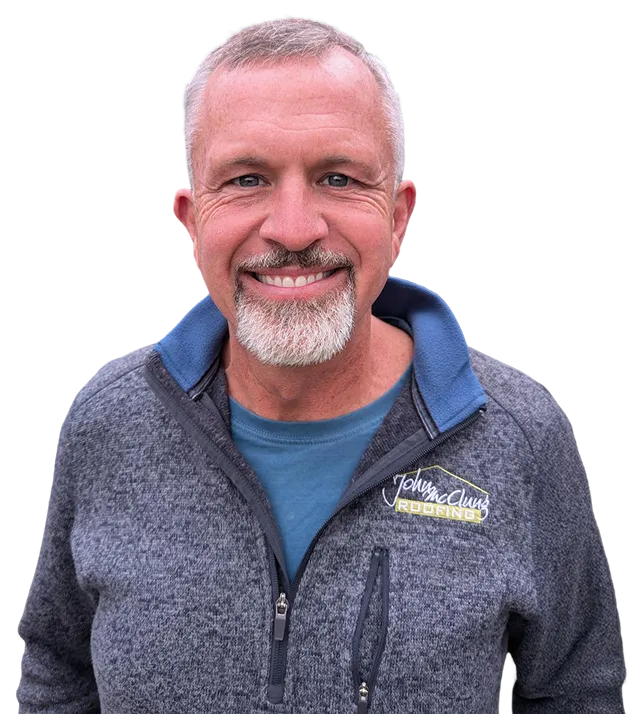
John McClung - Roofr of the Month - March 2026
Get to to know our March 2026 Roofr of the Month: John McClung.

What Makes a Roofing Company Great?
Take your roofing company from "good" to "great" with these actionable and achievable tips.
.avif)
The Neighborhood Roofer Explained
The friendly neighborhood roofer isn't a superhero. But it can be your superpower to ensure a long-lasting, successful roofing business.


More episodes
.png)
Cross-Training Crews to Survive Buffalo Winters (w. Chandler Pedini)
Chandler Pedini, our October 2026 Roofr of the Month, cross-trains his in-house crew on other trades to keep them busy year-round. Check out his story.
.png)
Physio Advice for Roofers: How to Prevent Aches, Pains, and Injuries
Physiotherapist Colby Bucci shares tips on how roofers can stay fit and safe on the job. We're talking stretching, rest, recovery, and treating yourself like an athlete.
.png)
Staying Lean, Winning Retail, and the 60 Second Response Time
Owen Atherton, Roofr of the Month for September 2026 and a first-year business owner, shares his strategy behind staying lean, marketing everywhere, and responding to everyone within 60 seconds.
