

Roof Coatings First: How Salus Exteriors Broke Into Commercial
Summary
Sallas Exteriors didn't jump into commercial roofing headfirst. They started with coatings. And it changed everything.
Based out of Houston, Juan Rodriguez and his team launched in early 2024 as a residential outfit, built almost entirely on referral partners instead of door-knocking. Commercial was always part of the five-year plan. They just got there a lot faster than expected.
How? Roof coatings. Acrylic, silicone, and a local manufacturer relationship that meant materials showed up when they needed them, not weeks later. That low-risk entry point taught the crew how to evaluate a roof, understand NDL warranties, and eventually graduate into TPO and modified bitumen. Now they're chasing high-rise and mid-rise multifamily work, still lean, still small, and still winning against companies ten times their size.
This one's for any residential roofer eyeing the commercial side and wondering where to start.
In This Episode:
- Why roof coatings are the lowest-risk way into commercial work
- Acrylic vs. silicone — and when to use which
- How manufacturer partnerships (and NDL warranties) actually win jobs
- The real cost of underestimating material and labor on a commercial bid
- Why referral partners matter more in commercial than residential
- Staying lean: competing with 40-year-old commercial companies without the overhead
Transcript
00:00:00:04 - 00:00:12:11
Speaker 1
That's one of the biggest risks in the project. On the roof code. Yes, you may be able to estimate as much as you want, but two squares of a gun is just putting a little more and it throws off the entire count.
00:00:12:12 - 00:00:27:21
Speaker 2
You're listening to The Roofer Report, the ultimate podcast for roofing professionals, business owners, and entrepreneurs. Get insider access and hear about the highs, lows and tales of triumphs from thriving business owners. Brought to you by roofer, hosted by Pete McKendrick.
00:00:27:22 - 00:00:45:00
Speaker 3
All right. Hey, everybody, welcome back to the Roofer Report. I'm your host, Pete McKendrick, and joined today by a former guest of the show, former roofer of the month here, one from Sally's exteriors. Excited to have you back on one. Thanks for joining.
00:00:45:02 - 00:00:49:16
Speaker 1
Thanks. Good morning. This is a great opportunity. I'm happy to be back.
00:00:49:19 - 00:01:13:00
Speaker 3
Yeah, man. Excited to have you and excited about this topic. You know, it's been something that personally for me has been kind of on the forefront here. I've been dealing, talking to a lot of people lately about commercial roofing and, you know, and and I do feel like a bit it's a bit misunderstood and a bit underserved, maybe a little bit, you know, by the, by the software side of the market.
00:01:13:00 - 00:01:29:19
Speaker 3
And so, you know, we're always interested in it and interested in helping commercial roofers as much as we can, but we're seeing more and more. Especially like when I'm at shows, you know, I'm getting more and more guys walking up to me either saying like, hey, we just started doing some commercial roofing. We're thinking about doing commercial roofing.
00:01:29:21 - 00:01:46:13
Speaker 3
You know, how does your program work for it? You know, can I use roofer for commercial roofing? So. Excited to kind of dive into all that a little bit with you here today. But for the folks that don't know you or know Sally's, give us a little bit of background on yourself and Sally's exteriors where you guys are from.
00:01:46:13 - 00:01:48:08
Speaker 3
How long have you been in business, stuff like that.
00:01:48:09 - 00:02:21:00
Speaker 1
So, thank thank you for that introduction, Pete. We started in 2024, early 2024. Residential model, you know, here in Houston, Texas, we have such a big area to cover, but at the same time, we have a lot of competition. So what we started was residential. We went lightly door knocking in the beginning, but we started getting more referral partnering.
00:02:21:01 - 00:02:54:00
Speaker 1
The more referral partners we understood that worked for us, the more money we put into attracting a better network of people. And that definitely was kind of like a start. Hurricanes, forms, hailstorms, you know, a lot of wind damage in 2024 here really kept us busy. But at the same time, we had a plan when we started, I started this company.
00:02:54:01 - 00:03:26:22
Speaker 1
Yes. Here's my five year old where I want to have my in the next five years. Commercial was commercial. Side was three. We are in two and we've already work. So yeah, I think it's a type of the way we set up our company in the beginning kind of helped us formulate that plan for the commercial side.
00:03:27:00 - 00:03:47:21
Speaker 3
I love that you had the commercial idea in mind from the very beginning, and that you went into it with a plan. That was a five year plan, right? You know, most of the time I think we go into these things or we talk to contractors that are like, yeah, I'm in year two. And, you know, they're pivoting, maybe out of necessity, they're pivoting out of, you know, how competitive a market is there.
00:03:47:23 - 00:04:04:02
Speaker 3
You know, pivoting maybe based on conditions like right now, you know, we were just talking about before we jumped on this about hailstorms and how now there's been like a massive lack of weather. Right. So, you know, people are people who were banking on weather, haven't had it, and now they're having to make a pivot because of that.
00:04:04:06 - 00:04:04:19
Speaker 3
00:04:04:23 - 00:04:25:15
Speaker 1
And that's why we set up our company sells exteriors instead of sells roofing. You know, you hear of a roofing company, sells roofing, would just be residential. Right. But we're we're more than just that. We are solid exteriors for reason. We set it up so we can become residential, commercial, industrial work, you know.
00:04:25:17 - 00:04:37:00
Speaker 3
Nice. Now, what was the idea? Why would why did you want to get into the commercial side? Was it just the market itself and how saturated it was, or were there other factors that kind of played into that decision?
00:04:37:02 - 00:05:00:00
Speaker 1
It was a little bit of both. Again, our our plan, my, my plan from the beginning was to become a roofing contractor. And for me, that meant I cannot just stick to a residential. If I'm going to be an overall roofing contractor, I'm going to be known my community for roofing. I want to be known in several different circles and networking groups.
00:05:00:01 - 00:05:25:16
Speaker 1
I want to be a complete roofing contract, and we set that up from the beginning. In order for us to educate ourselves and to make it work. I can't stress enough how much education I've done with my vendor partners, distributors, manufacturers in order to get us to start on the commercial side.
00:05:25:17 - 00:05:46:10
Speaker 3
Yeah. How hard did you guys find that transition from, you know, starting out in residential and then deciding, you know, and obviously now it's happened much quicker than you had planned on. So what what was kind of the driving force. What allowed you to be able to to break into the commercial side? And what do you think were some of the biggest challenges that you had to overcome to get in there?
00:05:46:13 - 00:06:10:14
Speaker 1
Yeah. So again, door knocking for us wasn't a big thing in the beginning. We put our our marketing into referral partners. And the more referral partners, you know, came to us. They loved the work that we did on the residential side. They said, hey, I have other clients that, you know, people that we know that are looking for commercial work.
00:06:10:20 - 00:06:32:14
Speaker 1
And I can refer them to you, you know, do you guys do this work? And that kind of came in and in, you know, like, hey, yes, we are doing some of this work. We started smaller, you know, repairs and things like that. And then we moved into the roof coating side. And you tpo pretty much everything.
00:06:32:16 - 00:06:54:22
Speaker 3
Yeah. Yeah. And that's an interesting piece right. Because we've talked to even residential roofers that were very small starting out. And they've utilized that repair and maintenance side to get the business up and running. And also it allows you to learn the roofing systems. Right. Like it allows you to learn the products and the installation before you take on a much larger project.
00:06:54:22 - 00:06:58:06
Speaker 3
And so I think it's a piece that's majorly overlooked.
00:06:58:09 - 00:07:28:15
Speaker 1
You know, you know, honestly, even one of the more important parts on the commercial side, it's all about the warrant, right? If you're not with the the right manufacturer that you can provide them that NDL warranty, you're not going to get those those bigger contracts or those contracts at all. So starting out on the repair side, understanding how water works on these flat roofs or some pitched roofs, you get the idea behind it.
00:07:28:16 - 00:07:57:04
Speaker 1
You get your crews to start learning and they're able to kind of understand it as they go through and start educating themselves manufacturers even more. You get that no warranty. And then you know how a system works. You know, many factors do a very good job. Many companies on their overall installation prayer.
00:07:57:06 - 00:08:21:19
Speaker 3
Yeah. Yeah. Because ultimately, at the end of the day, it's their material, right? So they want it installed correctly because if it isn't and it leaks, then it looks bad on them too. So you know, obviously smart to to take the time to train the installers, you know, you know, but yeah, it's so it's interesting to me who are some of the manufacturers that you found easiest to work with on the commercial side?
00:08:21:21 - 00:08:30:05
Speaker 1
So I would say, kind of like a little bit of a, information for us. We started with more roof coatings.
00:08:30:11 - 00:08:31:01
Speaker 3
Okay.
00:08:31:04 - 00:08:57:14
Speaker 1
In the roof coating side, I think it'd be a little bit easier to start in. We did our research and stuff and we said, you know what, let's get with a manufactured local so we can have materials ready when we can, you know, not to wait. They can give a support on the education side, logistics. And we can partner with our distributors with them as well.
00:08:57:16 - 00:09:44:01
Speaker 1
Understanding the roof coating and how that works on commercial side. Flat roofs, you get the idea. Quicker than, you know, like a TPO. Why? Because it's less risk, right? You're not opening up an entire system, and then you're like, oh, wow. You know, rain is coming here in Houston. You know, it gets crazy. Yeah. Right. So that's one we minimized our risk by going with the roof coating center first after we got a few projects in, you know, the guys on the stood, we were able to kind of market a little more on the repairs and market repairs once they understood how to evaluate a roof on the production side on the to
00:09:44:02 - 00:10:13:14
Speaker 1
code it. We kind of gradually continued to get more education on the side, on the side, and obviously the metal roof on those are we love the metal. I always easier than the market. So once we got all of that, you know, we partner with on the roof coating side with isothermal protective coatings. Still use them. You know, they're great partners with us and go through ABC with them.
00:10:13:16 - 00:10:48:21
Speaker 1
And we've also partnered with Harvey Williams Union Plex on the recording side. It helped us a lot on the educational side on the recordings, and then we switched towards the two and we used Helheim and Vertigo their pension to with our training. And, you know, ABC full board or a more educational.
00:10:48:23 - 00:11:18:12
Speaker 1
Like, like a two day train, one day lecture one day. And that was you know, I think that because they invest in things like this, this education for us installers, we're able to provide those NGOs with extra detail on our work, and that's what they're looking for. It's not just let's go out and have a study and vacation.
00:11:18:12 - 00:11:22:14
Speaker 1
Now we're actually in.
00:11:22:16 - 00:11:48:05
Speaker 3
Yeah. You mentioned something there that I really liked. And you said that you're using a local supplier, right? A local manufacturer for these coatings. You know, and I could imagine in the beginning, right, when you're starting out and you're learning how to assess these roofs and stuff like that, being flexible and nimble enough to have someone local that you can go to that you know, can supply, potentially supply material in a very quick way.
00:11:48:11 - 00:12:00:20
Speaker 3
Right. Makes a huge difference. Right. As you guys are kind of like learning the process. And, you know, you're not getting custom cut material brought in from somewhere, you know, far away, you know, like you have somebody right there. Right.
00:12:01:00 - 00:12:28:04
Speaker 1
That's one of the biggest risk in the project. On the roof cover your roof coatings. Yes. You may be able to estimate as much as you want, but two squares of a guy just putting a little more and it throws off the entire town. So I was able to in our first project, you know, we were running low on material, underestimated our material waste haven McCall talked to forge, and he's like me by the day, you know.
00:12:28:05 - 00:12:30:19
Speaker 1
How about, you know, they're in a project?
00:12:30:21 - 00:12:31:11
Speaker 3
Nice.
00:12:31:12 - 00:12:38:04
Speaker 1
That's the type of partners are we looking for? Because those are the type of people that we are.
00:12:38:06 - 00:12:54:15
Speaker 3
Yeah, I like that. I think it's a great piece of advice. And I love the starting out with the, you know, kind of like learning the ropes there by doing the repairs and getting into the coatings. Right. The coatings obviously being the bridge that allowed you guys to get in there. Yeah. Let's talk about the quoting side really quickly.
00:12:54:17 - 00:13:31:19
Speaker 3
Obviously quoting residential quoting commercial very very different. Correct. I'm learning a lot about it. You know working with some partners that we have, you know, and how they're quoting and the way that they're approaching quoting and the detail, the level of detail has been, you know, really probably the most eye opening part for me. Yeah. But talk a little bit about how hard it was to, to convert or to transition from, you know, quoting a retail, a residential job, you know, quoting a single family home to now quoting these bigger jobs.
00:13:31:21 - 00:14:02:23
Speaker 1
Yeah. So one of the things that in our beginnings, we started out as we're not going to be the cheapest, you know, roofers out there, we're not going to be looking for the term roofer. We want to be a roofing contractor. And what that entailed was we needed to have an entire system once we understood the residential market, is you're installing a system regardless of which shingle you're putting, you know, you are installing a system on someone's house.
00:14:03:00 - 00:14:30:22
Speaker 1
That mentality kind of drove us to understand the commercial market. It's the same thing. You're installing a system. You're not just installing, you know, a protective barrier. It's an entire system that revolves on that property. So the transition for us. I don't think was was very difficult because we had that mindset. Hey, it's still a system. Now what goes into that for residential?
00:14:31:00 - 00:14:53:10
Speaker 1
You'll have your ice and water. You'll have your synthetic. You'll have, you know, this and that. Take that same approach. What the system needs for the commercial cycle you have, depending on what the plans call, if you're in construction, or depending on if you're just doing a roof coating, which type of coding are you doing? Is it going to be an acrylic?
00:14:53:10 - 00:15:16:14
Speaker 1
Coding is going to be a silicon code. And a lot of this was educated from isothermal protective coatings in the beginning. And with new high end ABC in on the TPO side, there kind of was a little bit better. You can do it this way, you can do it this way, you can do it this way. And it's just like residential.
00:15:16:15 - 00:15:32:17
Speaker 1
There's a good, better, best commercial. That's the same thing. Transition is not a difficult part. The difficult part is understanding what the system entails, which system you want to push a little more because of what's required.
00:15:32:19 - 00:15:42:23
Speaker 3
Yeah. Let's talk a little bit about that from like a coding standpoint. What do you guys install the most and what do you find the best to install.
00:15:43:00 - 00:16:15:08
Speaker 1
Again it depends if there's a pitched roof like let's say for 12, you know, metal roof that maybe had 1415 years. And instead of reroofing it, you know you can do a coding if it needs certain specifics. So let's say it has to get some repairs done. And because it's pitch we can provide an acrylic.
00:16:15:10 - 00:16:43:15
Speaker 1
Now I say that because over time acrylic kind of it's a water based. So it water kind of coming into a little more on the silicone side. It's a little more expensive. The acrylic you can save a little bit more. So it understanding which type of system, in which type of roof you have is very critical. In order to understand which type of quote you're going to be.
00:16:43:17 - 00:16:46:09
Speaker 1
Flat roofs. We like to do silicone.
00:16:46:10 - 00:16:55:10
Speaker 3
Do you find commercial customers to be more educated about their roofs, less educated about the roof than a residential homeowner?
00:16:55:12 - 00:17:17:17
Speaker 1
I think they're about the same. I'll say that. Yeah. Nowadays, there's so much information out there, you know, in everything gets treated as a project, right? So let's say a commercial business owner, it needs to get a roof. They're not going to say, hey, I want a roof over there. Going to look for somebody to do an inspection first, you know?
00:17:17:22 - 00:17:43:15
Speaker 1
And that's where we come in. We still give them the education that they may not find online. Like, okay, if it's a pitch roof, we can do both, either silicone or acrylic, but acrylic, it's going to save you a little bit of money and gives you a very long term roof. Some people just like to use. Some people just like to use we contractors.
00:17:43:18 - 00:17:47:06
Speaker 1
We provide what's best for the specific.
00:17:47:07 - 00:18:06:14
Speaker 3
Well, let's talk a little bit about like if I'm a guy, I'm maybe I'm a residential roofer. Right now I'm looking to break into commercial. Let's talk a little bit about the projects and the margins. Right. Because okay. Because I think a big part of it too is, you know, like if I'm a residential roofer, maybe I've got that system dialed.
00:18:06:19 - 00:18:28:01
Speaker 3
You know, my team's knocking them out. We're probably doing a fairly decent volume. Those jobs are a quick turnaround, you know, and I'm probably looking at commercial and thinking that's the complete opposite, right. Like, these are jobs. Like I watch they redid I was telling you before we started this about we had a major hailstorm last summer. I watched them reroofed the school down the street from me.
00:18:28:03 - 00:18:52:16
Speaker 3
And you're talking about a monster job, right? Like, this is a monster high school. And those guys were on that roof for probably, I'd say, two and a half months total, right? Like, actually, like on the roof, doing like, like every, like, working their way across the sections of the roof, you know. But it was obviously a major job, you know, with either a lot of damage or a complete roof, probably based on insurance.
00:18:52:16 - 00:19:13:21
Speaker 3
But, you know, for a residential guy, you know, a guy that's been involved in the residential side looking at that project and was like the undertaking of managing that and the costs and everything involved in it. Is it worth it? Right? Is it worth it as a residential guy to make that transition to commercial? Yeah. You know, with looking at a project like that, the scope of a project like that.
00:19:13:22 - 00:19:46:15
Speaker 1
Yeah. So let me put it back to basics, right. In our beginnings, we didn't do many insurance work groups. Okay. And I think that gave us a easier transition from just, you know, doing retail work, understanding retail work instead of the insurance market. We did insurance or but if you understand the retail market and that's your majority of your residential roofs, you will have kind of a different mentality when you go into the commercials.
00:19:46:17 - 00:20:16:18
Speaker 1
None of our commercial groups have been insurance. None of them. Why? Because they they barely do that, you know? Yeah, maybe not in my area. Maybe in other areas. Maybe. In other cities. But what we've been focused is 100% retail on the commercial world. That being said, residential. Not that out in one day. 100 squares even knocked that out in one day, regardless.
00:20:16:20 - 00:20:29:21
Speaker 1
Commercial. On the other side, you are dealing with a massive undertaking, and you have to kind of have a mentality of.
00:20:29:23 - 00:21:04:21
Speaker 1
Yes, there are a little bit better margins. However, you will eat up your labor pretty quickly if you underestimate just to win the jump, right? It happened to us. Our first project. We I think we almost broke even, but that was because we, we were getting our, our bearings within the commercial side. Sure. And again coatings the less the less expensive material labor everything than a complete GPO roof.
00:21:04:23 - 00:21:37:15
Speaker 1
So we started that way because it's less risky. Get our bearings in and understand how this works. I would say 100%. Start with coatings and learn the commercial side. Another thing I, I would say roofer kind of help me out a lot too, because, understanding how to put all of my proposals together gave me a complete advantage.
00:21:37:17 - 00:22:09:01
Speaker 1
We understood on the residential side how to do the proposals with in all of the technology that we have in our disposable stack. And that transition was very easy. You know, if you're coming from the residential side and you don't use a couple roofer with everything is digitalized, materials are coming in from your like ABC or all your distributors not really doing the commercial side.
00:22:09:03 - 00:22:18:16
Speaker 1
Our easiest transition was we're doing everything digital. Apply that to the commercial side and it's easy.
00:22:18:18 - 00:22:42:06
Speaker 3
Yeah, yeah it's interesting right. Because I think a lot of times we look at CRMs in the market, right. And we're like, oh well these guys are built to residential roofers. You know the majority of their you know of the people using their product are corroding residential roofing. You know, they're not built for commercial. But more and more, what I'm finding is it's not that much different, right?
00:22:42:07 - 00:23:09:08
Speaker 3
It's not different enough that you can't use it. Right. Like you can use it. I mean, we I was telling you earlier that we were using a worker and we have the company right now. I've been sitting in on some calls with a company that's making a transition to roofer and is a fairly large commercial company, and to watch them be able to manipulate our product and our product, be flexible enough to be set up in the way that they needed to be, to quote, large commercial jobs, has been really interesting to be involved in.
00:23:09:08 - 00:23:20:00
Speaker 3
And and proved to me, you know, honestly, that it's capable of doing it right. You know, that you can get in there and you can manipulate it to, to be what you need on the commercial side and to be able.
00:23:20:00 - 00:23:20:17
Speaker 1
To, you know, what.
00:23:20:18 - 00:23:21:15
Speaker 3
To do.
00:23:21:17 - 00:23:37:00
Speaker 1
So there's a bunch of different things. So we spoke out on the beginning. If you start out with repairs right on the commercial side, there's no different than any repairs on the residential side using roofer.
00:23:37:01 - 00:23:37:17
Speaker 3
Yeah.
00:23:37:20 - 00:23:45:09
Speaker 1
Like to give a quote or an estimate. It's exactly the same thing. You'll use the same template. It's just commercial instead of residential.
00:23:45:10 - 00:23:46:10
Speaker 3
Yeah.
00:23:46:12 - 00:24:09:06
Speaker 1
You could add things here and there, you know, to make it look nicer. But it's the same thing. And I would say anybody starting out into the commercial side repairs, no repairs, understand how they work, why they work. And you get to know all the different things on a roof before you scope out a big project.
00:24:09:08 - 00:24:10:14
Speaker 3
Yeah.
00:24:10:16 - 00:24:21:19
Speaker 1
Another thing I want to say, last year, I think I asked one of the sales reps in roofer had three different workflows.
00:24:21:20 - 00:24:22:12
Speaker 3
Yeah.
00:24:22:14 - 00:24:30:02
Speaker 1
And because we did residential and commercial and limit us a bit, and now we have I think seven. Yeah. 7 or 8.
00:24:30:03 - 00:24:30:18
Speaker 3
Yeah.
00:24:30:19 - 00:24:53:06
Speaker 1
That was huge for us. Now is now we can do residential and commercial both at the same time with workflows. And the instant estimator kind of helped us out as well to have those workloads. It's so much simpler and cleaner within our our home account.
00:24:53:08 - 00:25:18:01
Speaker 3
Now, how do you find it to be to find commercial jobs versus residential jobs? Now, obviously, like you said, you're in a really saturated residential market there. So I know it's very competitive to to land residential jobs in that Houston area. But when you're looking at both, you know, how difficult has it been for you guys to build that pipeline of commercial versus the residential side?
00:25:18:03 - 00:25:43:02
Speaker 1
I think it's it all has the same my opinion. It has the same amount of work. It's just a bigger monster, right. So you do have to go door knocking on, let's say multifamily, you know high rises or mid rises. You got to go door to talk to those property managers right. They're the ones who can give you access or can give you information.
00:25:43:04 - 00:26:02:03
Speaker 1
At the end of the day, they're the ones that have to protect the roof or their tenants. So yes, definitely not in that side. You do have a little bit more work. Digital marketing also helps. But again, for us, referral partners are the best.
00:26:02:05 - 00:26:11:22
Speaker 3
Yeah, I think that that's a big piece, right? Like we I think it's overlooked a bit on the residential side is the relationship building part of it. But on the commercial side is critical, right? Like.
00:26:12:00 - 00:26:42:08
Speaker 1
And, I stress so much on the referral partners because for us, if you have one project, let's say with a new construction project that you're doing a new TPO roof, let's say 300 squares, and we're calling 300 square. That's small on the commercial side, right. And they love the work you did, the level of attention you have with other subs, because it's not just you there.
00:26:42:09 - 00:26:53:23
Speaker 1
It's one of different subs. The organization factor, the communication. If you check all those boxes, why wouldn't they give you more work? Right?
00:26:54:02 - 00:26:54:18
Speaker 3
Yeah.
00:26:55:00 - 00:27:11:07
Speaker 1
So you turn in a company that will hire you in the beginning to give you referrals, because it's their own company. They give you bids. Hey, give me a bid for this project that we call that a referral?
00:27:11:09 - 00:27:32:23
Speaker 3
Yeah. And I think that's a big note, right? I think, you know, we we talk about referrals on the residential side, you know, and you know like a referral friend here kind of situation. But on the commercial side, you know, you're talking to people who probably own multiple locations. Right. Own properties. Right. So they're able to give you referrals on their own pieces of property.
00:27:33:00 - 00:27:54:15
Speaker 3
Right. Say, hey, you guys did this project. I've got these for other projects, you know, for other multifamily setups or I've got some, you know, shopping centers or whatever the case may be. Right. You know, they've got they've got the work, you know. And so those, those continued relationship with those customers become really critical. Right. Because they can feed you multiple.
00:27:54:16 - 00:28:12:01
Speaker 1
And I mentioned this, I think one of the biggest changes from residential to commercial is how you brand your company. I think that branding side, it's a little more expensive for sure. You know, your people have to be wearing everything, right?
00:28:12:02 - 00:28:12:07
Speaker 3
Yeah.
00:28:12:08 - 00:28:45:15
Speaker 1
I mean, you have to have a clean truck. You gotta be looking the part on the commercial side, because maybe on a house, you're talking about 20,000. 30,000 on a commercial project. You're in the hundreds of thousands for even a small project. Yeah. So when when the the balance difference of these projects, it's so much bigger. They're looking for that extra branded, completely professional.
00:28:45:17 - 00:29:07:20
Speaker 3
Yeah. Makes total sense. I mean, obviously, like you said, there's a lot more money involved. And and you're potentially competing with other larger companies, right? A lot of times on the commercial side, you're up against some larger competition. And so, you know, having that, like you said, looking the part, you know, and being able to go there and have that level of professionalism can make a huge difference.
00:29:07:22 - 00:29:33:12
Speaker 1
And also this is probably the biggest thing that helped us out. And this is a huge tip for everybody. Just because you're doing commercial doesn't mean you have to have that. You don't need to have a lean company. We're still very lean, very lean, and that gives us the biggest advantage. Company that's been around for 40 years just doing commercial.
00:29:33:14 - 00:29:59:17
Speaker 1
We probably have ten locations nationwide. They have big payroll that they have to, you know, get done by every week. That gives us a big advantage when we don't have huge warehouse. We don't have several locations. We're still small. We can still compete because our prices may be a little lower. We don't have that extra overhead.
00:29:59:19 - 00:30:26:15
Speaker 3
Yeah. It's interesting. Right? Because when you were when we were talking about profit margins a couple of minutes ago, you know, and you were talking about how you guys barely broke even on the first job. Yeah. But the biggest thing I took away from that whole that whole piece was being able to manage your costs. Right. Like you said, the crew even putting down a little extra material in the wrong places, you know, can end up costing you on the material side, or you can burn through your labor extra quickly.
00:30:26:15 - 00:30:35:16
Speaker 3
And so being able to really dial in, managing your costs seems like it's more important than the actual revenue profit side.
00:30:35:18 - 00:30:59:04
Speaker 1
It's more on the project management side because you're actually handling a project residential work. Yes, you are handling a project, but it's a one day project. Yeah. You know, once you repeat that process over and over and over again, you you have it down to the teeth, you know, and if you have some leftover materials like, you know, nails or whatnot, you're going to use that on the next.
00:30:59:04 - 00:30:59:12
Speaker 1
Right.
00:30:59:13 - 00:31:00:07
Speaker 3
Right.
00:31:00:10 - 00:31:30:08
Speaker 1
Yeah. Commercial. It may not be the case. If you overestimate, you may not get the project. If you underestimate, you may not make any margins. Right. So you have to know your labor side a little. And that will come with experience. There's just no other way, you know, unless you have within your team that you want to spend the money and have a good estimator and a good project manager starting out, then absolutely do it.
00:31:30:14 - 00:31:38:01
Speaker 1
And even then, you may fall into areas where weather can really screw up the project.
00:31:38:06 - 00:31:56:00
Speaker 3
Yeah. Oh, sure. Yeah. From a timeline standpoint, what is the average timeline of a project like from the time you get a lead? You know, let's say a customer says, hey, I need you to go over here and quote a project from the time you're quoting that project to the time you guys are actually, like, finished with it.
00:31:56:01 - 00:32:15:21
Speaker 3
How long is that lifecycle in comparison to residential? Because like you just said, you know, residential we think quick turnover right. We think high volume lots of leads. We're going to sign up you know whatever 30% of them. And then we're going to just pump them through the system. You know every day we're on a new house. You know what is a timeline look like?
00:32:15:21 - 00:32:17:10
Speaker 3
How different is that timeline?
00:32:17:12 - 00:32:47:12
Speaker 1
Timelines a lot different, completely different. So, normally you have a project that maybe again, let's call it a smaller side, 300 squares. Right. Well, you have to go in. Let's say you get a call and say, hey, look, we're looking to have a roof replacement on this 300 square commercial property, okay? You go, you do your inspection just like your residential side.
00:32:47:14 - 00:33:23:17
Speaker 1
But at the same time, you're also competing with maybe four other commercial property. I'm sorry. Commercial roofer. And they take time to do their inspect. Not like the residential side. Maybe on some more difficult cases, the property owner has to get a thermal camera company that does it work on complete inspection if they share that with you, if you have the capability of doing that, you better.
00:33:23:19 - 00:33:58:16
Speaker 1
But it does take a little longer. Then on making that decision, the client has to make a decision and that takes many different channels of communication. They're not the ones paying. Yeah, they're the ones that are having to do all the logistics. So once that reaches the right person on that, they make the decision. And let's say they give you the project maybe a month, maybe two months, maybe even three months have passed by.
00:33:58:18 - 00:33:59:16
Speaker 3
Yeah.
00:33:59:18 - 00:34:22:11
Speaker 1
So and then from you to start going and doing the, the roof maybe another month, you know, maybe you're already busy and yes, they give you or maybe they have, you know, other subs working around and you can't be there. And it's a lot more logistics than residential.
00:34:22:13 - 00:34:23:23
Speaker 3
Yeah.
00:34:24:00 - 00:34:48:00
Speaker 1
But that's safe to say that once you understand the commercial, you educate yourself and your team a lot. That becomes standard. You'll see that you grab that mentality, you place it on the human, on the residential side, and you'll understand even bigger things that you are missing. And you thought you had a 100% down.
00:34:48:05 - 00:34:58:01
Speaker 3
It's funny, because I was going to ask you that question. How much do you think the commercial, being on the commercial side and figuring that side out, has helped your residential side of your business?
00:34:58:03 - 00:35:21:09
Speaker 1
Oh, a lot. Well, one of the biggest things that we are, we started within our first our second year, we started last year new construction on custom homes, and we did about maybe 50 houses within that year. Great number. Not many margins. Very low single digits.
00:35:21:12 - 00:35:23:00
Speaker 3
Yeah.
00:35:23:02 - 00:35:41:18
Speaker 1
Now, having that extra knowledge on the commercial side, you can apply that let's say on the residential new construction, not just on the commercial, I'm sorry, not just on the custom homes but on bigger.
00:35:41:20 - 00:35:55:14
Speaker 1
Builders track homes. Yeah. And if you can get contracts there, there is money to be made. It's just knowing how to make those margins more margins. But big volumes.
00:35:55:18 - 00:35:57:02
Speaker 3
Yeah.
00:35:57:04 - 00:36:22:08
Speaker 1
That transition from the commercial side is one of the things that we're wanting to have on the new construction shingle, insulation, insulation, on track homes. And that's our plan for the next couple years. And I'll say this, you may have a leg up on other cities is there's so much construction here. There's still so much work, but margins are even lower.
00:36:22:10 - 00:36:29:06
Speaker 1
And it's just a matter of how you your company, your team on the logistical side.
00:36:29:10 - 00:36:50:23
Speaker 3
Yeah. And I think a lot of that is based on relationship to. Right. So that's carrying over a bit from the commercial side as well as, you know, like the those builder relationships obviously can be long term and can produce a lot of volume for you. You know, as they move from one neighborhood to the next. And so, but that's, I think, a piece that you're taking.
00:36:51:02 - 00:36:51:05
Speaker 1
The.
00:36:51:05 - 00:36:51:10
Speaker 3
New.
00:36:51:10 - 00:37:09:12
Speaker 1
Construction site, just like we have our, our shingle installer crews. Right. For big construction companies, they put the same, how do I put this? They put the same value on having the same crew all the time.
00:37:09:13 - 00:37:10:04
Speaker 3
Yeah.
00:37:10:09 - 00:37:35:09
Speaker 1
If you do a good job first couple times, they're married with you. You know, they are wanting to keep you. Just like we want to keep our crews. Our new construction site is pretty much to make very little money, but to maintain our guys working throughout the year, that's your biggest push, because it makes no sense for you to have the best crew.
00:37:35:11 - 00:37:50:02
Speaker 1
You can only give them maybe 3 or 4 houses a week, whereas and not every month will be filled. If you're having new construction work, let's say 10 to 11 months out of the year, you can have them too.
00:37:50:04 - 00:37:50:20
Speaker 3
Yeah.
00:37:51:00 - 00:38:01:16
Speaker 1
And they'll stay with you. Big companies on the commercial side do the same thing. They're always doing build outs and they want to maintain you so you don't go with their competitors.
00:38:01:17 - 00:38:08:10
Speaker 3
Keep the work in your back pocket. Right. Keep the guys. Yeah, I like it. We'll talk a little bit just really quick.
00:38:08:10 - 00:38:26:01
Speaker 1
Here a little bit of effort on to that. So we are a labor based or labor mentality roofing contractor. Why? Because we can sell all we want. But if we can't provide the service we don't have a company.
00:38:26:03 - 00:38:27:04
Speaker 3
Yeah.
00:38:27:06 - 00:38:41:02
Speaker 1
Or we can have a bunch of labor guys, but we can sell a little bit but maintain the guys all the time. Right now it's just me and one other person as a sales rep. And for the time being, that's all we need.
00:38:41:04 - 00:38:58:18
Speaker 3
Yeah. It's interesting. Right? Because I, I preach this quite often. Right. Is that like the production side of things I think gets like kind of second billing, right. If you look even, you know, you look at the trainings that are out there and the conferences that are out there, like so much of it is based around sales. And how do we sell more?
00:38:58:19 - 00:39:08:03
Speaker 3
How do we sell better? How do we build a bigger sales team? Right. And you hardly see anything with regards to the production side of things. And it becomes a bottleneck.
00:39:08:04 - 00:39:09:05
Speaker 1
Sales is important, right?
00:39:09:06 - 00:39:10:03
Speaker 3
Absolutely.
00:39:10:05 - 00:39:29:16
Speaker 1
Absolutely. Coming in and without closing, you won't have the guys working. However, if you yourself to have referral partners that will vouch for you, that will give you that extra instead of having one foot in the door, you're pretty much having 1.5ft in the door, you know?
00:39:29:17 - 00:40:02:15
Speaker 3
Yeah. Yeah. And what I always find interesting, though, is you see so many companies that overlook the production side. Like, they aren't labor focused. And so what happens is they sell, sell, sell, and then they, they create a bottleneck internally. Right? Where now you have a long lead times. It hurts your customer experience. Right. You're aren't you aren't available you know, to potentially like you got your guys overworked or overstretched now instead of in a situation where you guys are where you're able to manage your labor, you know, effectively across a couple of different areas.
00:40:02:15 - 00:40:03:22
Speaker 3
And so.
00:40:04:00 - 00:40:20:18
Speaker 1
And maybe on the residential side, you can kind of wiggle, you have a little more wiggle room. But on the commercial side, you tell one of your best clients that you know, you sign a contract, you have to fulfill your contract because if not their entire project, it's like, yeah, because of you. And then they won't hire you.
00:40:20:20 - 00:40:38:23
Speaker 3
Yeah. Yeah. You have to. Yeah. You have a much more strict timeline around that side. Correct. Yeah. You don't have the flexibility necessarily that you have on the residential side. Correct. Yeah. So talk really quick here as we wrap up a little bit about the future of Salus. What are you guys looking to do here in the next couple of years as a company.
00:40:39:00 - 00:40:40:00
Speaker 3
You know, what's the plan?
00:40:40:01 - 00:41:01:22
Speaker 1
That's a great question. So we've had to kind of reformat our business plan because we kind of got ahead of the game a little bit more. We definitely want to focus more on the high rise, mid-rise, high rise multifamily within our area. That's one of the areas that we feel that we are now able to do.
00:41:01:23 - 00:41:39:02
Speaker 1
We've actually done a couple of projects already, and it's a matter of investing the right money, meeting the right people and to do the right jobs. New construction on the residential side track homes. I want to be able to provide my guys with more labor. That way, they're, you know, completely stacked. And even if that means bringing in a new crew to do our residential side and kind of mix and match, you know, so new construction, residential track homes and commercial.
00:41:39:04 - 00:42:20:23
Speaker 1
Still residential, but is multifamily high rise mid-rise projects maintain that commercial pipeline that we got. Build a couple more new construction commercial projects. And another thing that we want to do is because of the clients, all that we have on the commercial side, they love the way we're working. We don't just do for them, we do roof insulation, gutters and exterior coatings for pain inciting to depending on the project.
00:42:20:23 - 00:42:35:00
Speaker 1
But anything that goes outside and protects water from coming into their property, that's our our where we want to excel and where we want to put money into any more project.
00:42:35:01 - 00:42:51:03
Speaker 3
I like it. Well, this has been fantastic. One, I really appreciate you jumping on. I think this has been some great insight. Like I said, I think we have more and more people kind of looking, you know, at the commercial side of things and, and seeing if it's viable for them, if it works, it's something they want to get into.
00:42:51:04 - 00:42:57:03
Speaker 3
And so I think this has been some great information, you know, to, to maybe encourage some people. Right.
00:42:57:05 - 00:43:09:22
Speaker 1
And roofer has been able to help me get to that level. So this is a great presentation for me to give because on the commercial side you'll stumble a lot of people don't share information.
00:43:10:00 - 00:43:32:06
Speaker 3
I'm not. Yeah. I mean obviously like I said, you're dealing with a lot of times with larger companies. You know, I think on the commercial side. And so yeah, not maybe as forthcoming with the information. So, so yeah. You know. Yeah. So but I'm seeing more and more smaller companies that are looking to get into the, the commercial side of things and seeing if it's something that will work for them.
00:43:32:06 - 00:43:34:20
Speaker 3
So I appreciate you you sharing the info today.
00:43:34:21 - 00:43:37:17
Speaker 1
Thanks for the time, Peter. I love jumping into the podcast.
00:43:37:18 - 00:43:59:07
Speaker 3
Yeah, I appreciate it. Well, thank you everybody for listening. Hopefully you guys get something good out of this and some of our other podcasts. If you haven't checked out our route for the month series, as well as some of the other guests that we've had here recently, I always encourage you to to go check that out. You can grab those on our website or YouTube or anywhere you listen to podcasts, Spotify and all of those places.
00:43:59:09 - 00:44:05:01
Speaker 3
Jump on there. Let's give a listen to some of these episodes. And again, thanks, Juan. I appreciate you taking the time this morning.
00:44:05:02 - 00:44:06:17
Speaker 1
Thanks. Thanks to everybody.
00:44:06:18 - 00:44:11:04
Speaker 3
All right. We'll talk to you guys soon. We'll see you next time on the roofer report. Hey, everybody.
00:44:11:04 - 00:44:21:18
Speaker 4
Thank you for listening. Check us out next time on the roofer podcast. But until then, be sure to like us, subscribe to us and check out all our other episodes on YouTube and Spotify.
Additional resources

Why Salus Exteriors Chose Roofr as Their First CRM | Roofr
Established in January 2024, Juan Rodriguez was looking for a CRM to help his business grow. Learn why he chose Roofr, and how it’s helped his business thrive.
.avif)
Juan Rodriquez - Roofr of the Month - August 2024
Learn about Juan, founder of Salus Exteriors and our August Roofr of the Month. Established in 2024, Juan has grown his business into a Houston, Texas icon.
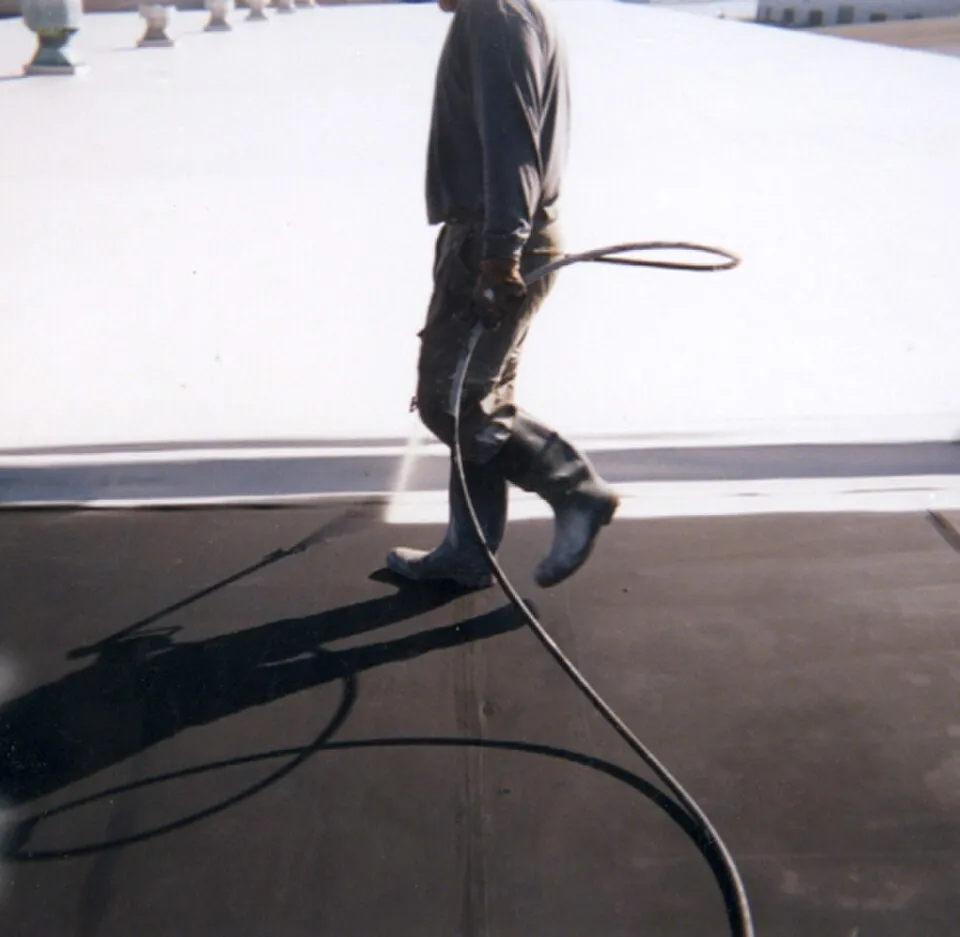
Roof Coating 101: Coating Types, Costs, and When to Use It
Not every aging roof needs to be torn off. The right roof coating can add 10-20 years of life at a fraction of replacement cost.
A Rapidly Rising Roofing Company: Salus Exteriors from Houston, Texas
Insights into how Juan Rodriquez has used software to help his new roofing company grow.


More episodes
.png)
Insights from a Roofing Manufacturer (w. Larry Sernick at CertainTeed)
Larry Sernick of CertainTeed shares his thoughts on the roofing industry from a manufacturers perspective. Hear his take on Class 4 shingles, solar, selling retail, and slow storm seasons.
.png)
Cross-Training Crews to Survive Buffalo Winters (w. Chandler Pedini)
Chandler Pedini, our October 2026 Roofr of the Month, cross-trains his in-house crew on other trades to keep them busy year-round. Check out his story.
.png)
Physio Advice for Roofers: How to Prevent Aches, Pains, and Injuries
Physiotherapist Colby Bucci shares tips on how roofers can stay fit and safe on the job. We're talking stretching, rest, recovery, and treating yourself like an athlete.
